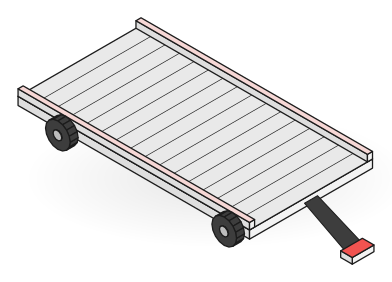
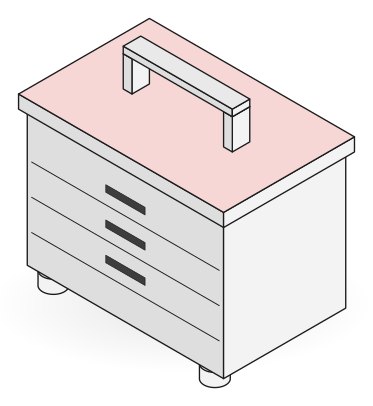
Customers are the blind spot.
DCs and depots count full, empty and broken carriers every day. What customers hold is worked out from deliveries and returns, and the real number shows only at the yearly audit.

RTI tracking software
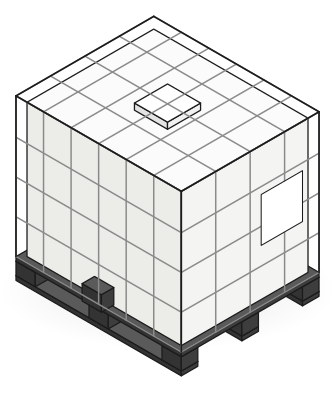
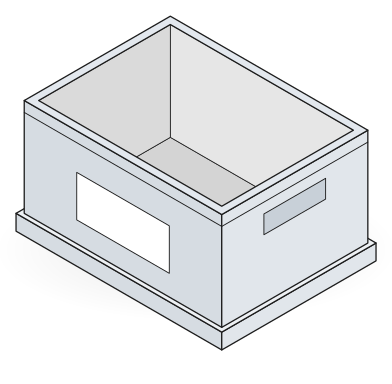
Rotion gives every returnable transport item a digital identity. Roll cages, dollies, CC trolleys and Dolav boxes run in one system, with custody per partner and recovery when they go missing.
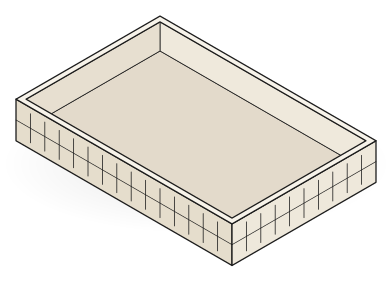
RTI tracking software records where each returnable transport item is, who holds it and how it moves between distribution centers, carriers, stores and repair partners. Rotion does this per item for mixed fleets of roll cages, dollies, CC trolleys, pallet collars and Dolav boxes, on QR, barcode, RFID or GS1 GRAI codes. Balances, losses and repair cycles then come from scans in one system.
Roll cages and trolleys are the carriers nobody counts. Your own sites report every day. What sits at customers stays a guess until the yearly audit.
DCs and depots count full, empty and broken carriers every day. What customers hold is worked out from deliveries and returns, and the real number shows only at the yearly audit.
Drivers note how many roll cages they dropped and collected at each stop. Add those notes up and the fleet seems to grow every month, while the audit shows it shrinking.
Companies in the same trade pick up your roll cages, and customers use them for their own deliveries or to take waste to a recycling yard. A visible tag gets cut off.
Each RTI type runs its own loop with its own rules. Rotion keeps them in one record, so you see where each type spends its days and where it leaks.
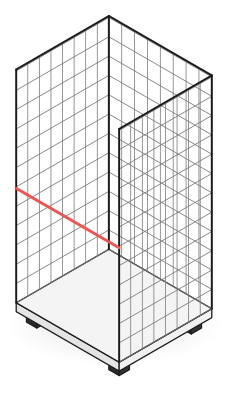 Roll cageOwned
Leaks on the carrier’s truck.
 DollyOwned
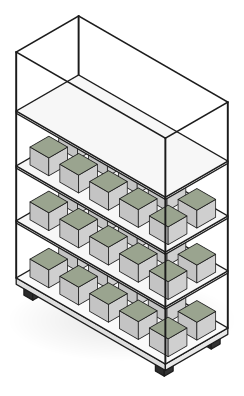 CC trolleyPooled
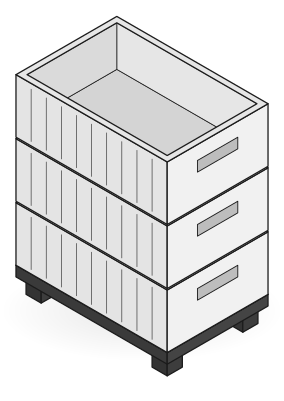
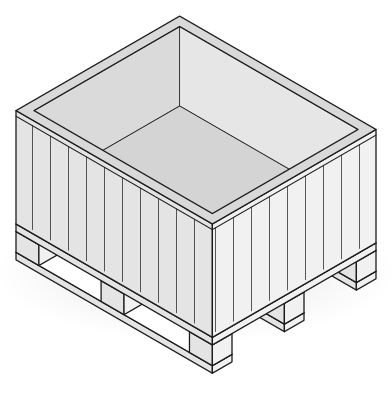 Dolav boxOwned
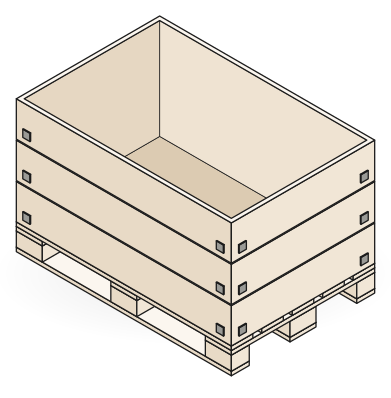 Pallet collarOwned
5 types, 12,230 items in one recordSample data
Every roll cage is scanned onto a truck and off it again. Rotion compares what each carrier collected with what it returned, week by week, and writes the statement when the gap stays open.
Roll cages collected, split into returned and still open
ReturnedOpen
Everything a retailer, carrier or pool operator needs to run returnable transport items of every type. Pick a feature to see it.
Explore the platform Fleet by typeBalance per partnerLoss and anomaly alertsReuse reporting Autopilot
| Customer | Out | Back | Open | Dwell |
|---|---|---|---|---|
| Store 2214 Ghent | 1,240 | 1,196 | 44 | 5 d |
| Customer 14 | 860 | 648 | 212 | 21 d |
| DC Zellik | 2,310 | 2,287 | 23 | 2 d |
| Grower Hoogstraten | 1,580 | 1,531 | 49 | 7 d |
| Store 0917 Leuven | 640 | 611 | 29 | 6 d |
| Customer | Rotations | Reuse |
|---|---|---|
| Retailer 3 | 412,300 | 94.1% |
| Filler 07 | 288,100 | 92.7% |
| Grower co-op 2 | 196,400 | 95.3% |
A driver or store scans a damaged item and picks what broke. Rotion books it to a repair partner, keeps the repair on the item’s record and brings it back into the fleet.
Wheel 46Frame 21Base 11Other 6
Repaired 61At Partner West 14Scrapped 9
61 × (€210 new − €38 repair)
Roll cageRC-0418-0977Back in the fleet Front wheel broken
Status
The driver scanned it at Store 2214 dock and picked front wheel.
Taken off the fleet count for loading.
Front wheel replaced. 3 days in repair
Scanned in at Depot Ghent, ready for turn 32.
Cost summary
Repair, average€38
New roll cage€210
Saved on this item€172
Repair history
Field results from operators running Rotion across pools, retail and industry.















One average turn hides the customers that keep roll cages for weeks. Cycle time per customer group shows where the fleet is tied up and how many carriers you really need.
Partners return carriers once they know you can see them. The first recoveries often come before the first alert.
Under PPWR (Regulation (EU) 2025/40), calculation rules for reuse apply from 30 June 2027 and reuse targets from 2030. Per-item cycle counts are the evidence.
Any carrier that moves goods and comes back to be used again: roll cages, dollies, CC trolleys, pallet collars, Dolav boxes, pallets, crates and trays. Rotion tracks all of them in one system, each with its own rules.
Yes. Mixed fleets are the normal case. Each type carries its own dimensions, deposit and repair rules, and balances can be read per type or across the whole fleet.
Trackers send pings: a tag that reports through passing phones can send hundreds a week, and one site can show up as several places. Rotion reads BLE tags, including tags that report through phone networks, and turns their pings into one location per site, custody per partner, dwell time and alerts for what needs action. We recommend industrial tags built for reuse loops, because cheap consumer tags hurt read rates and do not last.
Yes. Rotion reads QR codes, barcodes, RFID, BLE and GS1 GRAI identifiers, so relabeling is usually not needed.
No. Rotion runs alongside your ERP, WMS and TMS and fills what they do not cover: item-level history, custody per partner and loss patterns. For a comparison of tools, see the RTI tracking software buyer guide.
Every item has a holder and a location at all times. Autopilot flags carriers and stores holding RTIs too long and proposes a statement or a pickup, so recovery happens before a write-off. Read the 5 points where assets disappear.
Rotion takes both. Scan where you can: a loaded truck scans as one SSCC batch, so a handover is one scan. Where a stop has no scan yet, the driver’s count still goes in, and balances move from counts to scans stop by stop.
No. You can start with part of the fleet in the loops where you suspect loss. That shows where carriers leave the loop and how long each customer keeps them, and you decide on the rest from there.
No. A BLE tag can sit inside the frame, out of the way of loading lines and hard to cut off. Steel around the tag and a full load can block the signal, so a loaded roll cage on a truck may go quiet. You still see where it left and where it arrived.
 IMG 052 · DC Zellik · 50.8889N 4.2725E
Most teams go live in weeks, on the codes already on their fleet.
AI assistant · answers about Rotion
Hi. Ask me anything about Rotion: how it tracks crates, pallets, kegs and IBCs across partners, what Autopilot does, pricing, or PPWR.