

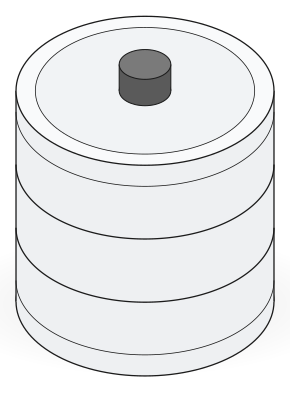
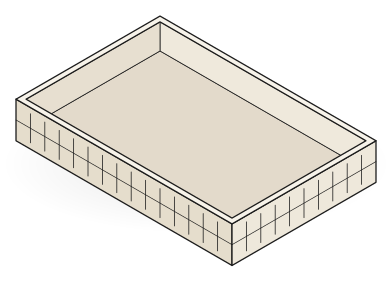
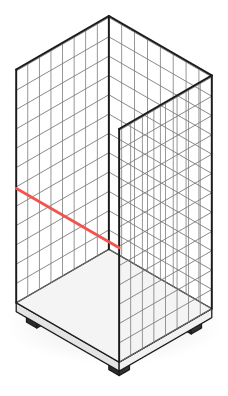
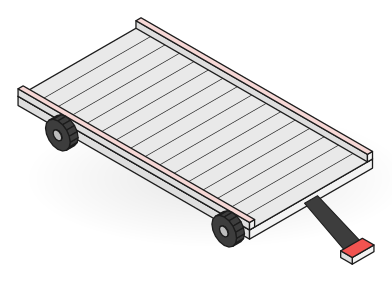
Scans get forgotten.
A handheld or RFID scan after every move works until someone forgets. Then the system says left and the machine stands right.

For OEM yards, rental depots, stockyards and port yards
Rotion puts a BLE tag on every machine, attachment and element, and turns the phones your staff already carry into readers. As people walk their usual rounds, the map updates itself. There are no gateways to install outdoors.
Rotion fixes a BLE tag to each machine, attachment or element and installs an app on the phones your staff already carry. Inside the site, the app picks up nearby tags in the background and places each sighting with the phone’s GPS and motion sensors. Sightings from several phones merge into one position per tag, so the yard map stays current without fixed readers.
A machine goes from inbound to assembly, wash and inspection, and sometimes back as a parts donor. The record does not always follow.
A handheld or RFID scan after every move works until someone forgets. Then the system says left and the machine stands right.
Staff walk or cycle the yard to find a machine for the next order. Deliveries wait while they look.
Gateways, gates and UWB anchors work indoors. On hectares of open yard they get expensive fast.
A worked example to fill in with your own numbers. Change the team, the minutes and the hourly cost.
Worked example. Fill in your own figures.
Machines move between zones several times a week. Every phone that passes adds a sighting, so nobody has to remember to scan.
Links each new tag to the machine number when the machine arrives, or imports the list in one go.
Walk their usual rounds. Their phones pick up the tags nearby in the background.
Search by machine number and walk straight to it. The radar on the phone covers the last metres.
Sees where each machine stands and how often it moved, before it plans the next job.
Finds the machine for an order without a search round, also from a link in the app they already use.
Run on the same tags, app and map, with one overview across every site.
Field results from operators running Rotion across pools, retail and industry.










Nobody changes how they work. The phones in their pockets do the rounds.
A BLE tag goes on each machine and is linked to its number by a scan or a list import.

Inside the site, staff phones pick up nearby tags in the background. Outside the site they stop.

Sightings from several phones and moments merge into one position per tag.

Search by machine number, walk to the spot and let the radar point out the last metres.

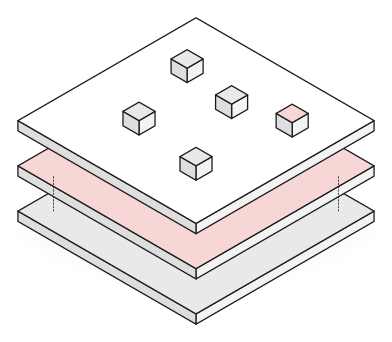
Zone, position and time of the last sighting for every tagged item.
Read more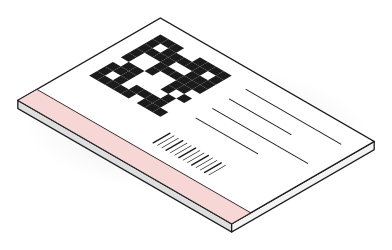
A passport per machine with each move, its work orders and documents.
Read more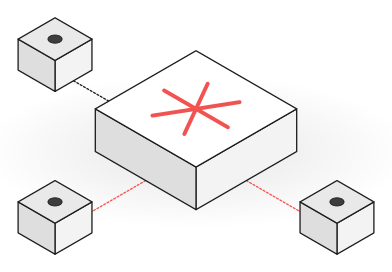
Autopilot flags machines that move far more often than the rest, or stay out of sight.
Read more
Positions and moves flow to your ERP and the field apps your staff use.
Read moreAutopilot watches every scan in your loop, flags what is going wrong, proposes the fix with its reasoning, and acts once you approve.
How Autopilot worksExcavator GR-2291 has moved five times this month.
Machines in the inbound zone move about once a month. GR-2291 served as a parts donor twice and went back to inbound each time, and its pre-delivery inspection is still open.
Flag GR-2291 to planning and propose the inspection before its next move.
You see it work in your daily operation before you decide. We agree the criteria up front, so the result is a clear go or no-go.
On machines in one busy zone of your yard.
The app on the phones of the people who work there.
Normal operations, no change to how anyone works.
The pilot fee is credited to the first year.
No. The app runs in the background on the phones they already carry and shows only a small indicator. Anyone who needs a machine searches by its number, uses the radar for the last metres, or opens it from a link in the app they already use.
In a first field test, positions landed within 3 to 5 metres. How close it gets depends on the signal conditions: an open yard does better than a hall full of steel. Close enough to walk to the right row, and the radar takes you to the machine. We measure it on your own yard during the pilot.
No. The map shows tag sightings only, never worker names or the routes people walk. The app scans only inside the site and stops when a phone leaves it.
Inside a hall, GPS is weaker. We place a few BLE tags like the ones on your machines as fixed anchors, which gives each zone in the hall a position. They are cheap and take minutes to put up.
Sites where your own staff walk the yard every day with company phones: OEM assembly and maintenance yards, equipment rental depots, precast and steel stockyards and port cargo yards. It fits less well where only rotating drivers pass, because the map needs regular passers-by.
Rotion reads any BLE tag, including tags you already own. We can supply tags with replaceable batteries, so you buy them once and only change the battery.
Battery use is low. The app scans only inside the site and at a set interval, which we tune with you during the pilot.
With a one-week pilot on your own yard: 100 tags, the app on the phones of the people who work there, and go or no-go criteria we agree up front. The pilot fee is credited to the first year.
 IMG 052 · DC Zellik · 50.8889N 4.2725E
Most teams go live in weeks, on the codes already on their fleet.
AI assistant · answers about Rotion
Hi. Ask me anything about Rotion: how it tracks crates, pallets, kegs and IBCs across partners, what Autopilot does, pricing, or PPWR.


