

Short answer: Keep one event ledger for every returnable container, RPC, tote, dunnage unit, pallet and crate, recording each custody handoff with time, location, counterparties, material class and quantity. Then generate each state’s EPR report from that ledger. Washington and Oregon already require producers to report covered-product data to an approved PRO.
US state EPR programs make packaging reporting a recurring operational job instead of a yearly spreadsheet pull. If your loop runs through producers, fillers, retailers, pooling partners and wash sites, the quality of your filings depends on how well you record custody. The goal is one event ledger for returnable containers, RPCs, totes, dunnage, pallets and crates, with each state’s reporting view built from that same ledger.
US EPR reporting readiness in five checkpoints
- Map covered materials and ownership rules by state. Start from legal responsibility and from who places packaging on the market, and only then from software fields.
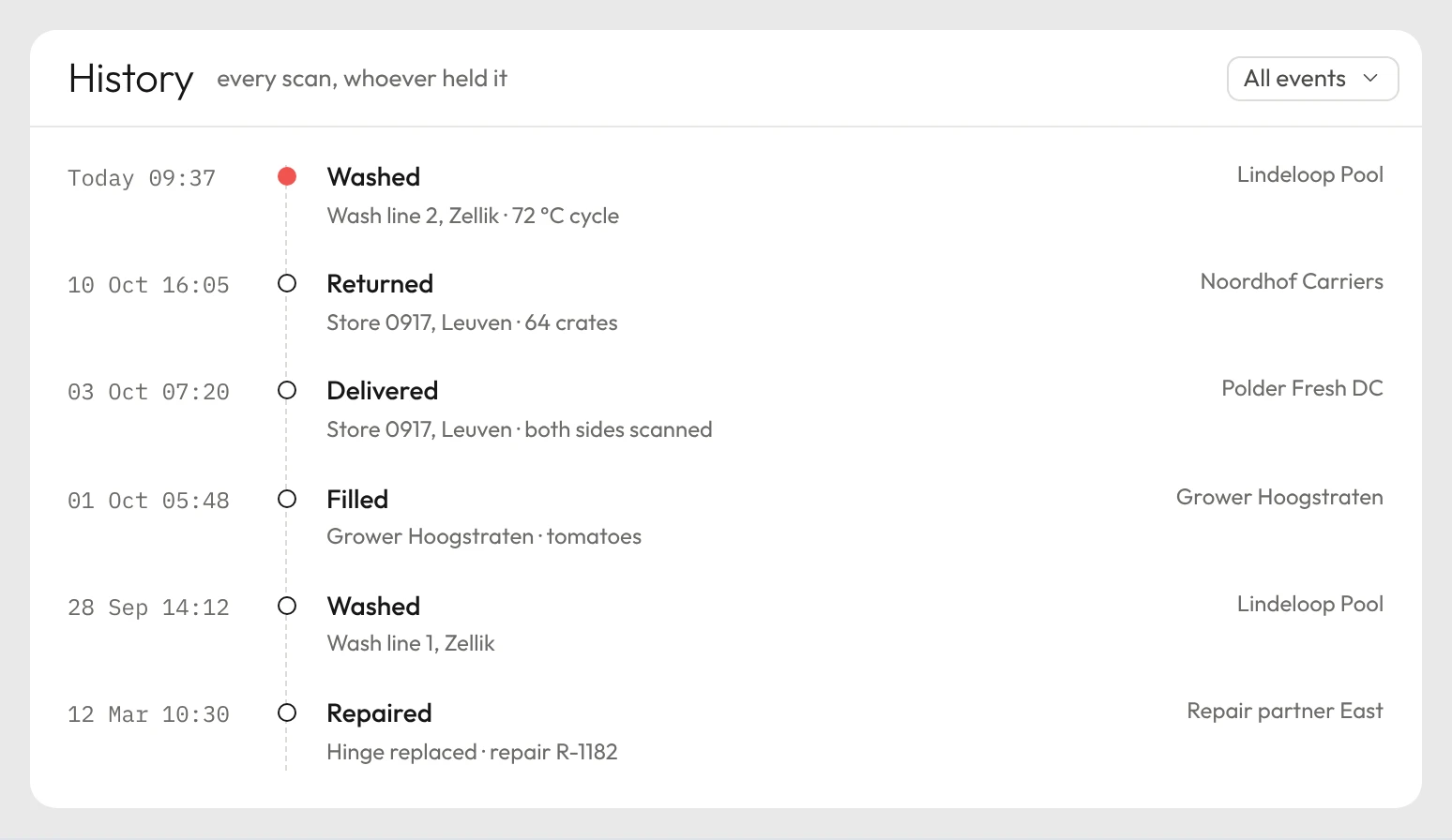
- Record every custody handoff as an event, with time, location, counterparties, material class and quantity in one shared record.
- Keep operational records apart from reporting views: one raw ledger, and state-specific outputs built from it by controlled transformations.
- Run monthly quality checks ahead of filing windows. Clear missing partner IDs, weight mismatches and duplicate records as they appear.
- Attach evidence to disputed movements. An audit asks for proof behind the totals.
What do US state EPR programs require from packaging operators and producers?
Definitions and timelines differ by state, but the pattern is the same: producers join a Producer Responsibility Organization (PRO), report data on the covered material they supply, and fund the program through fees. For reusable transport packaging, your data model has to serve legal reporting and daily exception control at once.
Here is what current state guidance says:
- Washington (duties start in 2026): the Department of Ecology states that, starting in 2026, producers of covered products must register with an approved PRO, report covered-product data to the PRO, and pay membership fees.
- Oregon (in force since 2025): DEQ states that from 2025 onward, producers of covered products must register with an approved PRO, report supply data to it, and pay membership fees. DEQ listed May 31, 2026 as the anticipated deadline for reporting 2025 supply data, a date set by the PRO. Check DEQ for the next cycle.
- California, SB 54 (targets for 2032): compliance summaries from Source Intelligence and Assent track 2032 targets for recyclable or compostable covered packaging, plastic reduction and recycling performance, with producers taking part through an approved PRO. Check CalRecycle for the current state of the regulations before you rely on a specific obligation.
So reporting cannot wait for a year-end extraction. It has to come out of day-to-day movement data by design.
Which data should you capture on every handoff to make EPR reporting defensible?
Teams that pass reporting reviews agree on one minimum event record and use it at every partner touchpoint. Filing templates differ by state and PRO, but a defensible report almost always rests on the same facts: material class, responsible entity, quantity moved and exception status. Make this handoff dataset mandatory:
- Asset or shipment reference: the serialized asset ID where you have one, plus the shipment or batch reference.
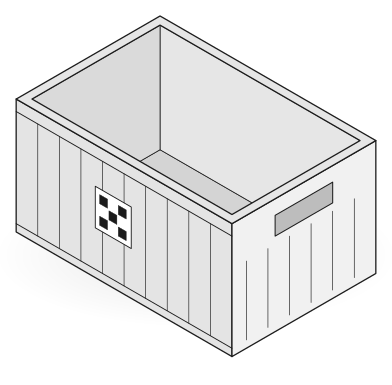
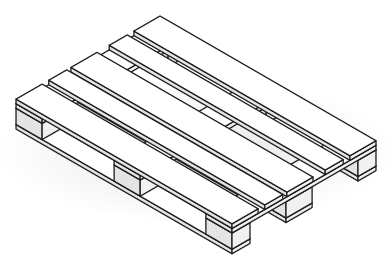
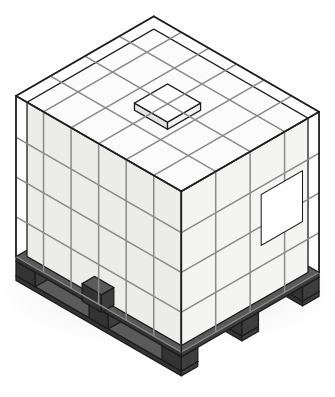
- Packaging class: the returnable container type, for example RPC, tote, crate, pallet, dunnage unit, keg or IBC tote.
- Material attributes: a standard material family and the reportable subcategory.
- Quantity and unit basis: units moved and, where the reporting method needs it, the linked weight basis.
- Counterparties: the legal entities at origin and destination, not site nicknames.
- Timestamp and location: the event time and an operational location code.
- Movement type: issue, transfer, return, repair, wash, quarantine or write-off.
- Responsibility state: who holds custody, and who owns the resolution of an exception.
- Evidence: a photo, signature, scan log or transfer document reference.
- Correction trail: adjustments that cannot be overwritten, each with a reason code, user and time stamp.
Some state filings do not ask for asset-level serials. The structure still pays off there, because it cuts fee disputes and makes the annual reconciliation much faster.
How do you align US state EPR reporting with EU PPWR without running two systems?
Run one operational backbone with two compliance views. EU PPWR reporting and US state EPR reporting ask different questions, but both need consistent movement evidence and material classification. Splitting systems by region lowers data quality in exactly the places where audits and cross-border contracts need it most.
A workable setup has three layers:
- An operational event layer: one shared ledger of movement and custody events across partners.
- A policy mapping layer: rule sets per state or region for covered-material definitions, reporting periods and fee logic.
- An output layer: filing packs, partner statements and internal controls, generated by controlled queries.
The mapping layer also absorbs differences in vocabulary. EU teams talk about returnable transport packaging and RTIs, while US teams search and report in terms of returnable containers, RPCs, totes, dunnage and container tracking software. The data model should carry both sets of terms without duplicating records. For the EU side, our guide to PPWR reuse reporting lists what the regulation asks you to track.
What does a practical 90-day rollout look like for multi-partner loops?
Most teams lose time trying to perfect every route before the first reporting cycle. It is faster to put one enforceable event record live on a few routes, show that exceptions get closed, and then scale from that template. By day 90 you should trust a monthly reporting dry run, and a dashboard screenshot is no longer enough.
Days 0 to 30, scope and event setup:
- Choose one route family with real exception volume.
- Fix the mandatory handoff fields and reason codes.
- Set owner response times for late returns, mismatches and condition disputes.
- Measure the baseline: missing fields, duplicate events, unresolved exceptions.
Days 31 to 60, controlled production and reconciliation:
- Go live on the pilot routes with real partners.
- Reconcile the operational ledger against finance views every week.
- Record correction reasons and update operator guidance wherever the data drifts.
- Start monthly mock reports grouped the way your PRO expects.

Days 61 to 90, reporting and the scale template:
- Check reporting outputs against the source events.
- Freeze the pilot template: field definitions, exception workflow, export logic.
- Extend to the next route cluster with the same controls.
- Document the audit pack, so the team can answer regulator or PRO questions quickly.
What should reusable packaging tracking software do to keep EPR reporting low friction?
The software should cut reporting effort by enforcing event quality where the data is created, instead of adding another reconciliation step in the back office. In multi-party loops that means supporting operators in production, keeping custody transfers explicit, and producing compliance views without stitching data together by hand.

At minimum, look for software that can:
- track individual assets and movements, with one custody owner per exception
- work with the labels you already use, whether QR, barcode, RFID or BLE
- keep evidence with each event so disputes close faster
- separate operational records from reporting views, so every filing can be reproduced
- export state and partner reports from one governed ledger
Rotion’s reuse reporting builds these views from the same handover events your teams scan every day. If you are comparing tools, our returnable packaging tracking software comparison covers the options.
A team that still negotiates liability in spreadsheets at month end usually lacks event governance more than it lacks effort. If you run returnable containers across several partners and want audit-ready reporting without adding headcount, request a demo and test one real exception path from start to finish.
Frequently asked questions
Do we need a separate system for each US state EPR program?
Usually not. Most teams keep one operational ledger and apply state rule mappings in the reporting layer. Separate systems add reconciliation risk and make governance across states harder.
Can we report correctly if we start with partial serialization?
Yes. You can start with mixed granularity as long as custody transfers are explicit and the correction trail is strict. Full serialization gives you more control later, but a disciplined event record comes first.
Is this only relevant for single-use packaging producers?
No. Reusable loop operators still need reliable evidence for producer reporting, fee allocation and contract disputes wherever program rules require covered packaging data.
What KPI should we prioritize first?
Exception aging, broken down by reason code and counterparty. If unresolved exceptions fall while volume holds, your reporting readiness is improving. When they rise, filing quality usually drops next.