
Items disappear quietly.
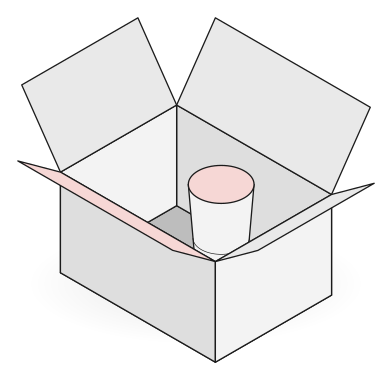
Cups go home with consumers, boxes stay in offices and mailers sit in drawers. Without scans you cannot tell where the loop breaks.

For reusable packaging startups
Rotion runs reuse schemes for cups, takeaway boxes, e-commerce packaging and canteen trays. Track every item, run deposits and show return rates from the first pilot. Starter costs from 150 EUR a month.
Rotion gives every cup, box or mailer in your scheme its own identity and records each handover between restaurants, canteens, webshops, consumers and your wash partner. It runs deposits, shows return rates per location and produces the reuse data clients, investors and regulators ask for.
A reuse scheme lives on how many items come back and how often they go out again. Most startups only learn that number at the end of a pilot.
Cups go home with consumers, boxes stay in offices and mailers sit in drawers. Without scans you cannot tell where the loop breaks.
A deposit paid at one site and refunded at another needs a clear ledger, or partners stop trusting the scheme.
Caterers, retailers and investors ask for return rates, cycles and impact per site. A spreadsheet will not convince them.
A reusable bowl pays off when it comes back often enough. Set your own numbers and see the return rate where reuse beats single-use.
At 97%, each use of a bowl costs €0.07 less than single-use.
Sample numbers. Rotion shows your real return rate per site from the first scan.
Restaurants, canteens, webshops and consumers pass your packaging on. Each handover is a scan, so return rates show per location.
Hand out cups and boxes and take them back, with one scan each.
Issue packaging at the counter and collect it at the return rack.
Send orders in reusable mailers and see which ones come back.
Pay a deposit, return the item at a return point and get the deposit back.
Collect returns. Each one counts for the location where it came in.
Washes, checks and sends items back into circulation, logged per item.
Field results from operators running Rotion across pools, retail and industry.











Partners and consumers scan with any phone. Each scan moves the item to its next holder, so you see where returns stall.
A restaurant or canteen hands out an item and the deposit is recorded.
The item travels home, to the office or by post. Custody sits with the consumer.

Returns at any participating site or drop box. The deposit is refunded.

The wash partner logs each cycle and restocks the sites running low.

A pilot fits on Starter. When you add sites or items, you move up a plan on the same account, with every item and scan you already have.
One account, 18 months
Locations in use against the plan limit
Months 1 to 18Months 1 to 3
Pilot at Canteen A
Months 4 to 12
Six sites on campus, from Canteen A to Canteen C and three cafés
Months 13 to 18
28 sites across the city, from Café 11 to Office 4
Sample scheme. A location is any place where items are scanned or received.
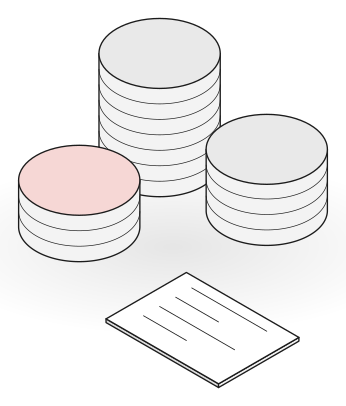
Deposits held, refunded and open, per site and per consumer.
Read more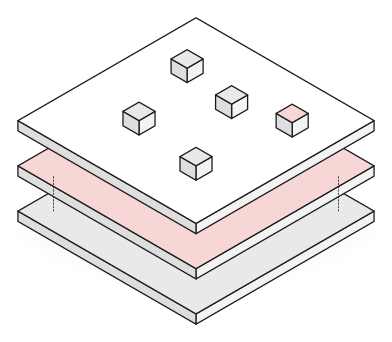
Rotation and return time for every location in the scheme.
Read more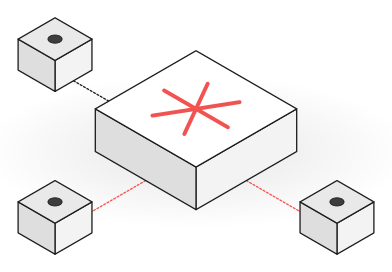
See where items go out and stop coming back, per site and per week.
Read more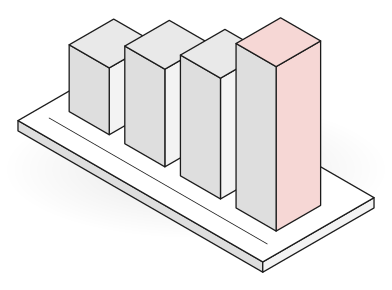
Cycles, return rates and reuse figures per site for clients and investors.
Read moreStarter comes with 14 days free and no credit card. Most of a pilot fits in that time.
Sign up at startup.rotion.eu and create your item type.
Import or print QR codes and label the first 500 bowls.
Invite Canteen A by phone and link.
First issue scan at the counter.
First return scan at the drop box.
First week: 1,140 issued, 1,086 back.
Trial ends. Export the pilot report for your client or investor.
Rotion Starter starts at 150 EUR a month and comes with 14 days free. You set it up yourself through Rotion Starter and move to a larger plan when the fleet grows.
No. Rotion reads QR, barcode and RFID, and you can combine them. Adding or switching a technology does not change the platform or your data.
Yes. Pilots and full rollouts run on the same system. Rotion runs Repasys, a consumer reuse pilot with 106,312 packages across 6 retailers, on the same platform. Read the Repasys case study.
From 12 February 2027 takeaway sellers in food service must accept containers that customers bring, and from 12 February 2028 they must offer reusable packaging within a system for reuse. That creates demand for schemes that can prove their return rates. See the PPWR Navigator and our guide to the takeaway rules.
You do. Rotion owns no fleets, consumers or contracts, and you decide what each partner sees.
A pilot at one site fits on Starter: up to 2,500 items at one location, from 150 EUR a month. A location is any place where items are scanned or received, so a scheme with several canteens or restaurants starts on Launch. You move up on the same account and keep every item and scan.
No. Autopilot, Rotion’s AI agent, comes with the Custom plan. At pilot volumes the reports on Starter show where items stop coming back: return rate, cycles and losses per site.
 IMG 052 · DC Zellik · 50.8889N 4.2725E
Most teams go live in weeks, on the codes already on their fleet.
AI assistant · answers about Rotion
Hi. Ask me anything about Rotion: how it tracks crates, pallets, kegs and IBCs across partners, what Autopilot does, pricing, or PPWR.