
Nobody knows who has it.
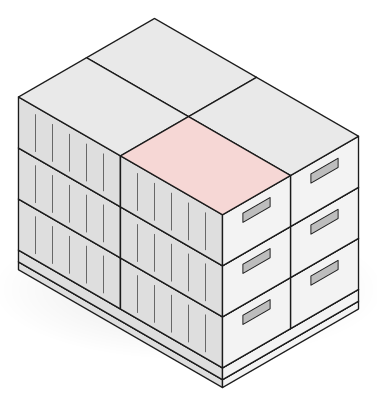
Thousands of boxes sit in homes and offices. The webshop cannot say which consumer or client holds which one.
For webshops, retailers and B2B suppliers
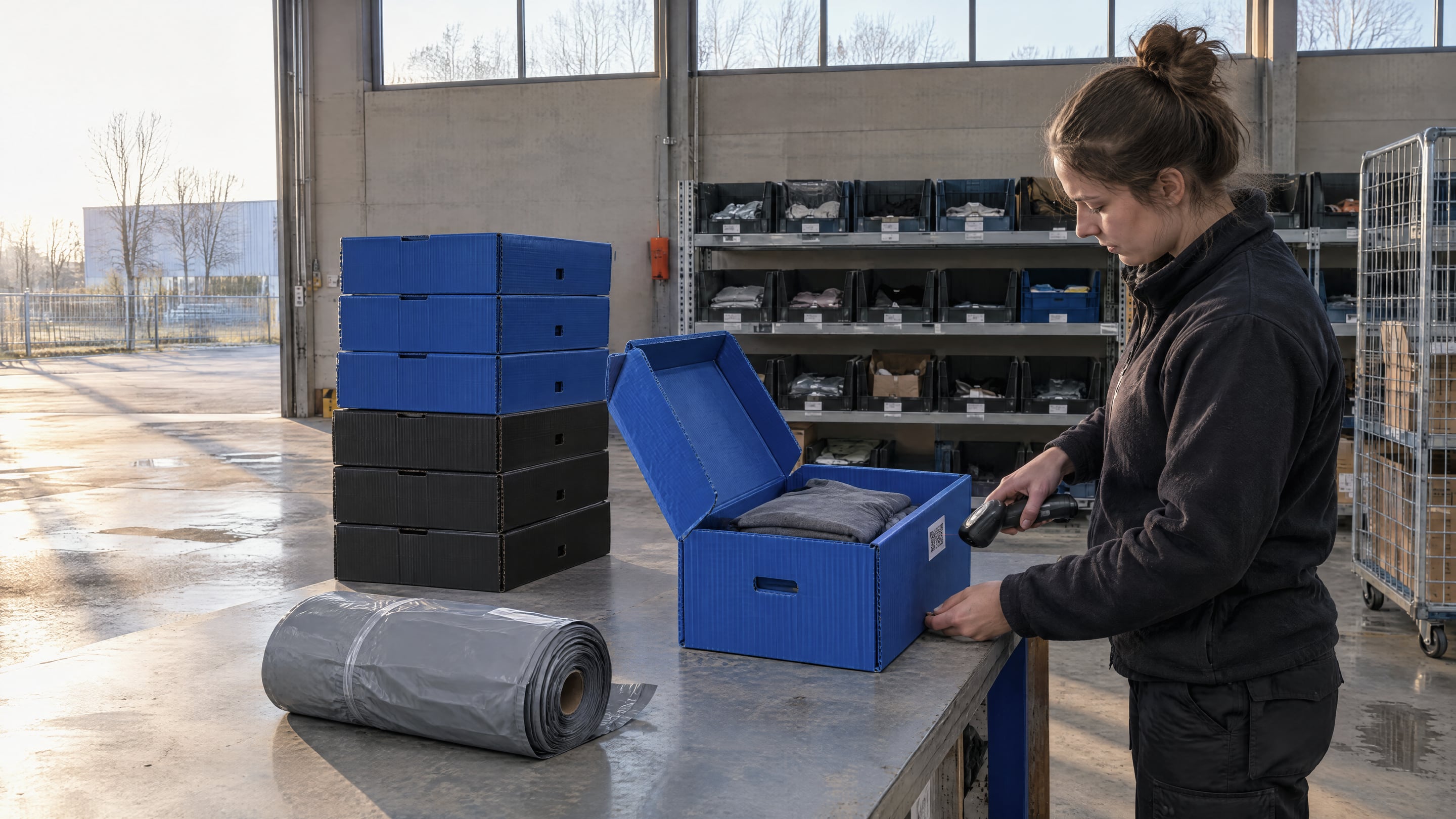
Rotion tracks every reusable box, tote and mailer you ship, from the packing table to the consumer or the business client and back. Each package carries its order, its holder and its deposit, so you know which ones are still out and who has them.
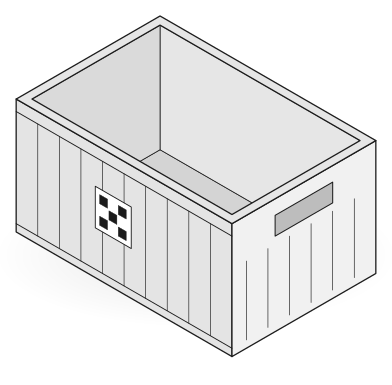
Rotion gives every reusable box, tote, mailer or bag its own code and ties it to the order it ships with. Each handover after that is a scan: the carrier, the return point, the business client and your return hub. You see which packages are still out, who holds them and for how long, and the same scans run deposits and the reuse figures PPWR asks for.
A reusable box only pays off when it makes its trips. Without a record per package, nobody knows where the missing ones went.
Thousands of boxes sit in homes and offices. The webshop cannot say which consumer or client holds which one.
A box comes back by post or through a store. Without a scan, the deposit cannot go back to the right person.
You buy more packaging every quarter and cannot tell whether the leak is a route, a client or a return point.
An order leaves in a reusable box and comes back by one of several routes. Each handover is a scan, so the package always has a holder.
Scans each package at the packing table. The scan ties it to the order number.
Deliver orders and take empties back on the next round. Custody moves with each scan.
Keep the package until they return it. They need no app and no account.
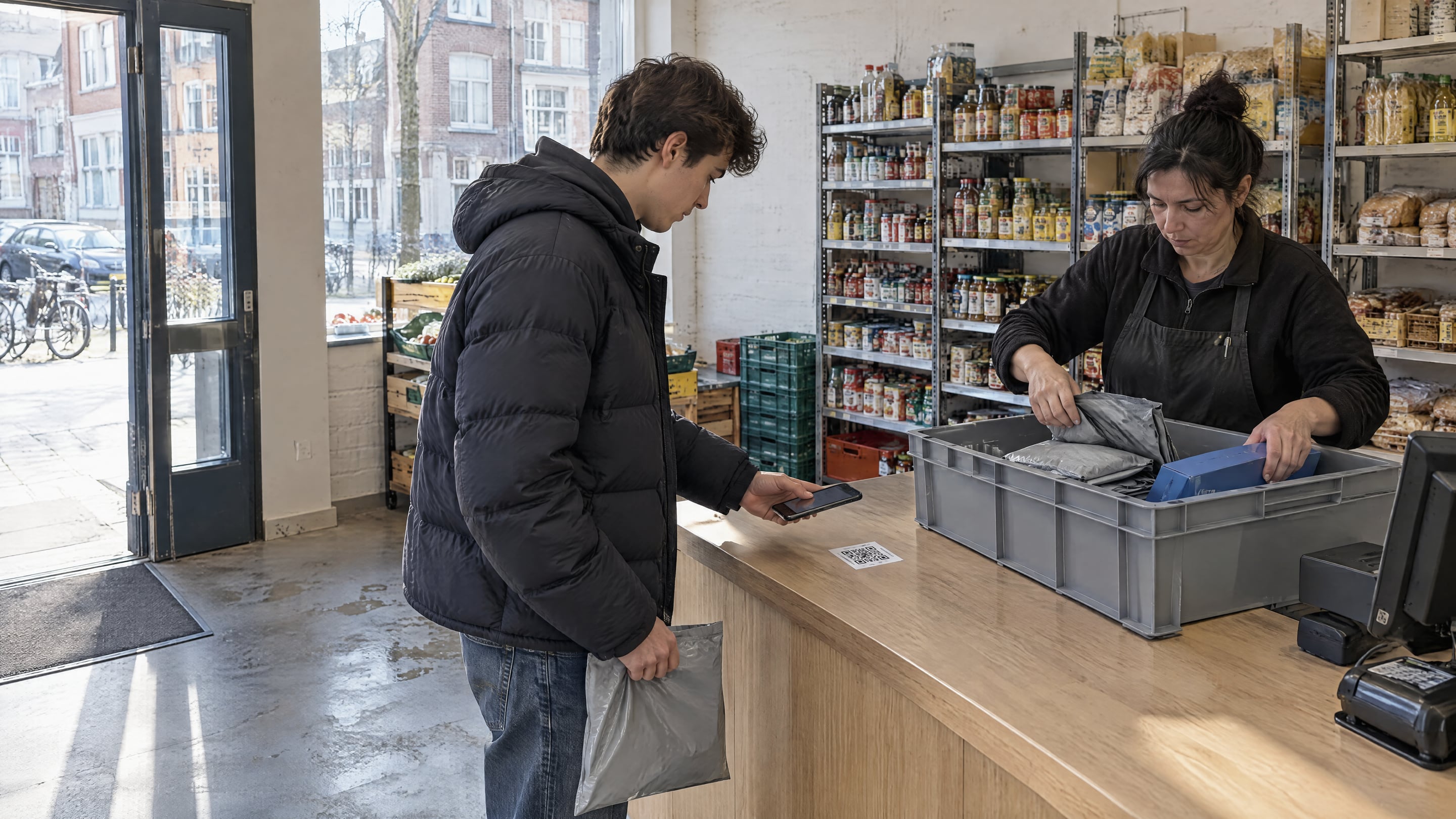
Take returns over the counter. Where there is no reader, the consumer scans the package and the return point code.
See the boxes at their sites in their own portal, and request a pickup or drop empties off.
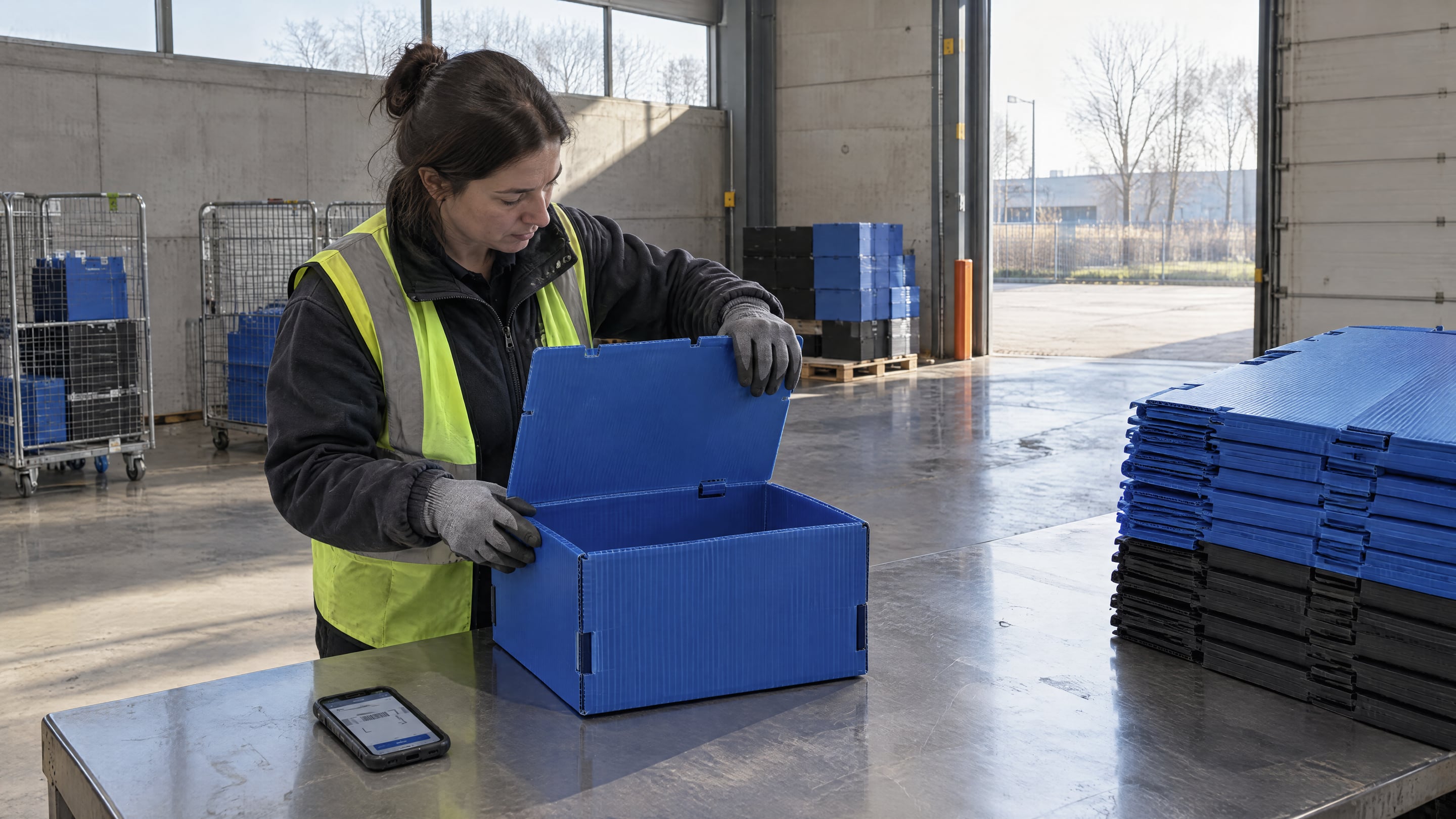
Checks and cleans returned packages and logs each wash cycle.
A consumer order and a business delivery leave the same packing table. They come back by different routes, and Rotion follows both.
Sample data. Shipped and back count packages scanned this month.
Field results from operators running Rotion across pools, retail and industry.














Your team, the drivers and the return points scan with any phone or the readers they already have. Consumers scan only where a return point has no reader.
The packing scan ties the package to the order number from your WMS, ERP or webshop.
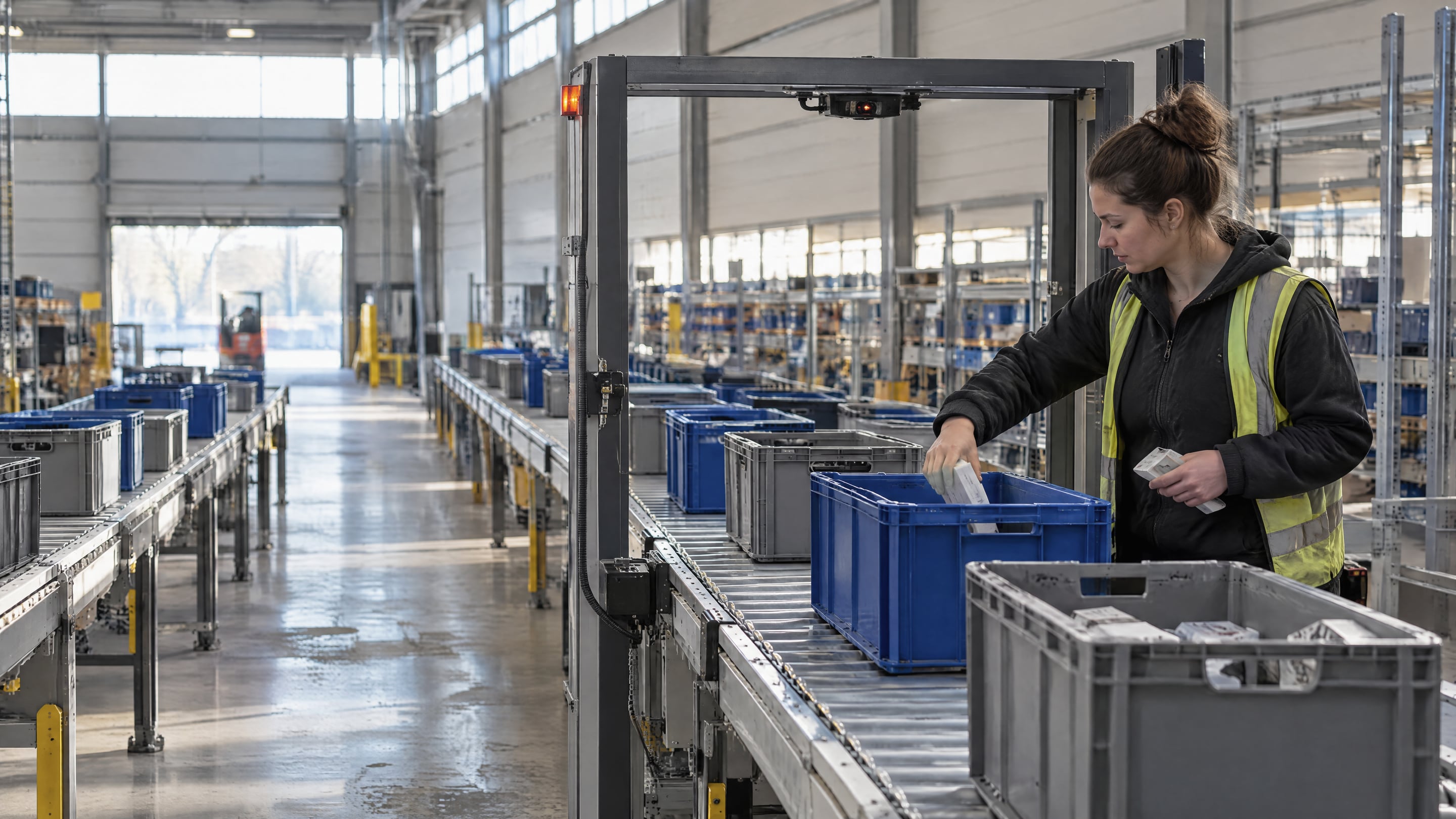
The carrier takes the order out. Business clients confirm receipt in their portal.
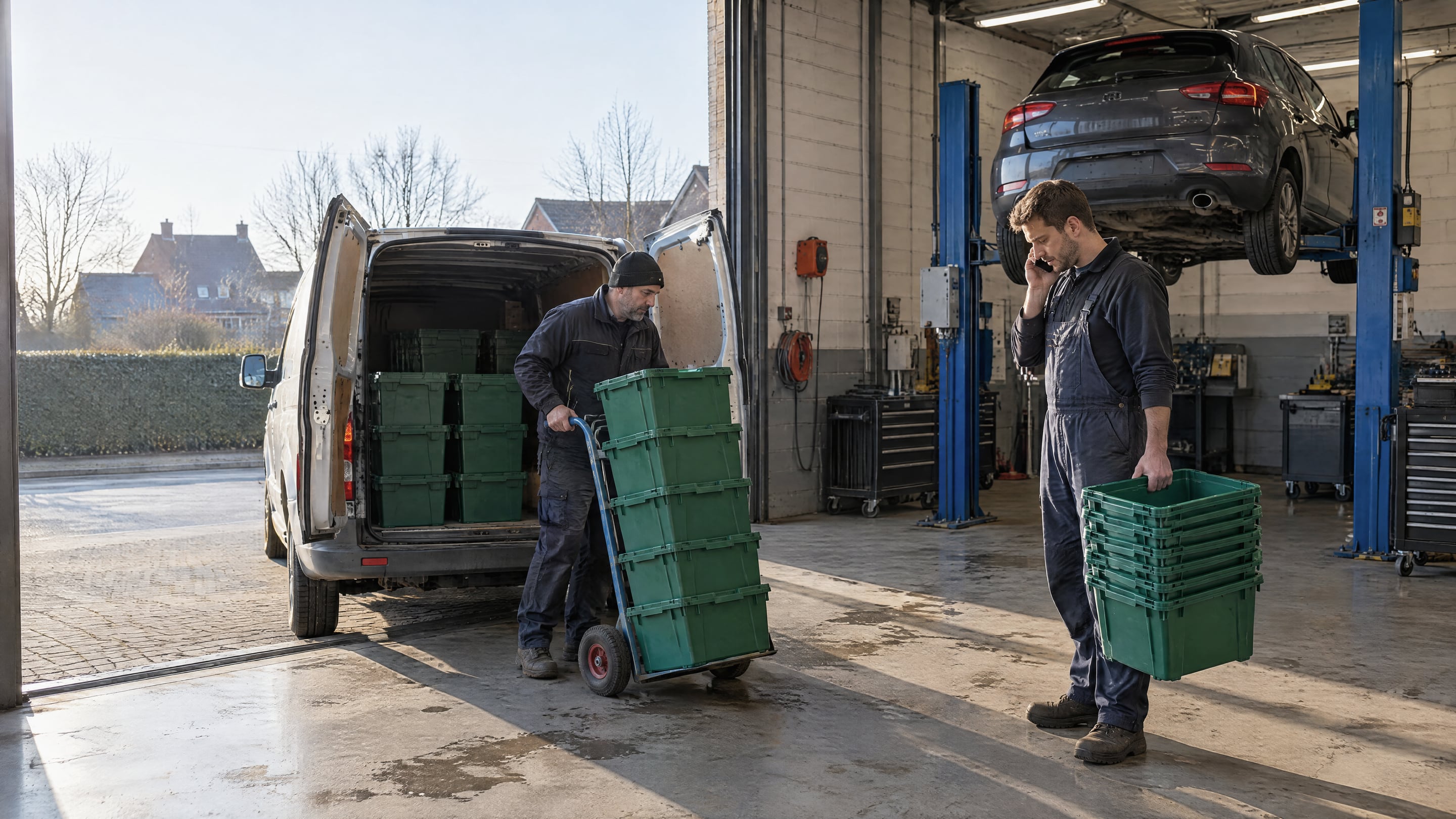
The driver takes it back on the next delivery, or the customer drops it at a store, a return point or the post office.
The return hub checks each package, logs the wash and puts it back on the packing line.
A business client logs in to its own portal and sees the boxes at each of its sites. It requests a pickup or drops empties off, and you charge for the boxes that never come back.
| Site | Boxes on site | Oldest |
|---|---|---|
| Antwerp workshop | 38 | 6 days |
| Ghent sitePickup requested for Fri, Oct 23 | 412 | 49 days |
| Mechelen office | 12 | 3 days |
| Total | 462 |
Sample data. The client sees only its own sites. Charges follow your agreement with each client.
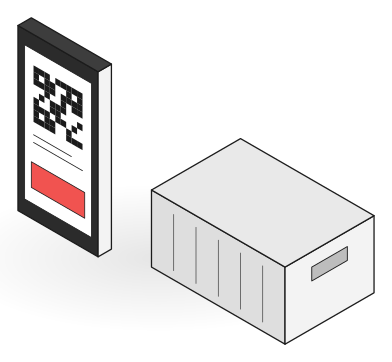
Every package per consumer, client, route and return point, updated with each scan.
Read more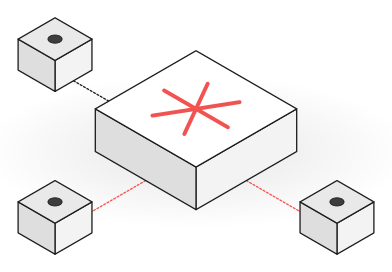
Autopilot flags packages that stay out too long, per order or per client.
Read more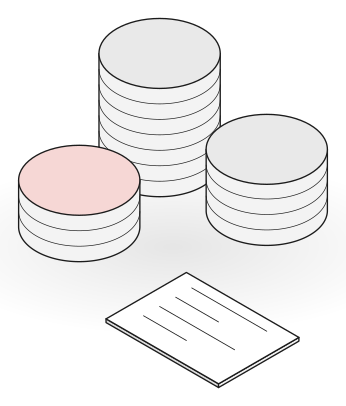
A deposit per package, charged with the order and released on the return scan.
Read more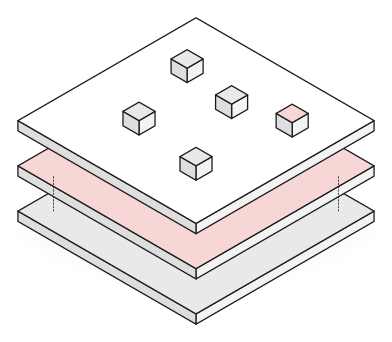
Trips per package and the reuse share per format, from the same scans.
Read moreAutopilot watches every scan in your loop, flags what is going wrong, proposes the fix with its reasoning, and acts once you approve.
How Autopilot works412 boxes shipped to Client 14 in August are still at its sites.
Client 14 returns 96% of its boxes within 21 days. Since its Ghent site opened on 2 September, nothing has come back from there, and the driver has not scanned a pickup.
Propose a pickup at the Ghent site with the next delivery, and ask Client 14 to confirm the count in its portal.
No. Most returns are scanned by the driver, the store or the return point. Where a return point has no reader, the consumer scans the code on the package and the code at the return point with their phone camera. That scan marks the package as returned and releases the deposit.
By one of three routes: the driver takes it back on the next delivery, the consumer drops it at a store or return point, or posts it back. Each route ends in a scan, and your return hub checks the package before it is packed again.
Some retailers do not link a package to the person who receives it. Rotion then counts per retailer: packages out and packages back, by post and every other route, as a running balance. Reminders to consumers need the link to the order.
Yes. Each client gets a login to its own portal with the packages at each of its sites. It can request a pickup, or drop empties at your return points or stores. Packages that do not come back become a charge line per client, exported or pushed to invoicing.
From 1 January 2030, at least 40% of the transport packaging an operator uses in the listed formats, e-commerce packaging included, must be reusable within a reuse system, with an aim of 70% by 2040 (Article 29(1)). Deliveries to another company in the same member state must be 100% reusable from 2030 (Article 29(3)). Cardboard boxes are exempt (Article 29(4)). From 2030 or later, e-commerce packaging may hold at most 50% empty space (Article 24).
Start with one packaging type from one fulfilment center, for example the boxes you ship to business clients. Put a code on each, scan at packing and at return, then add consumer orders and return points on the same setup. Most teams go live in weeks.
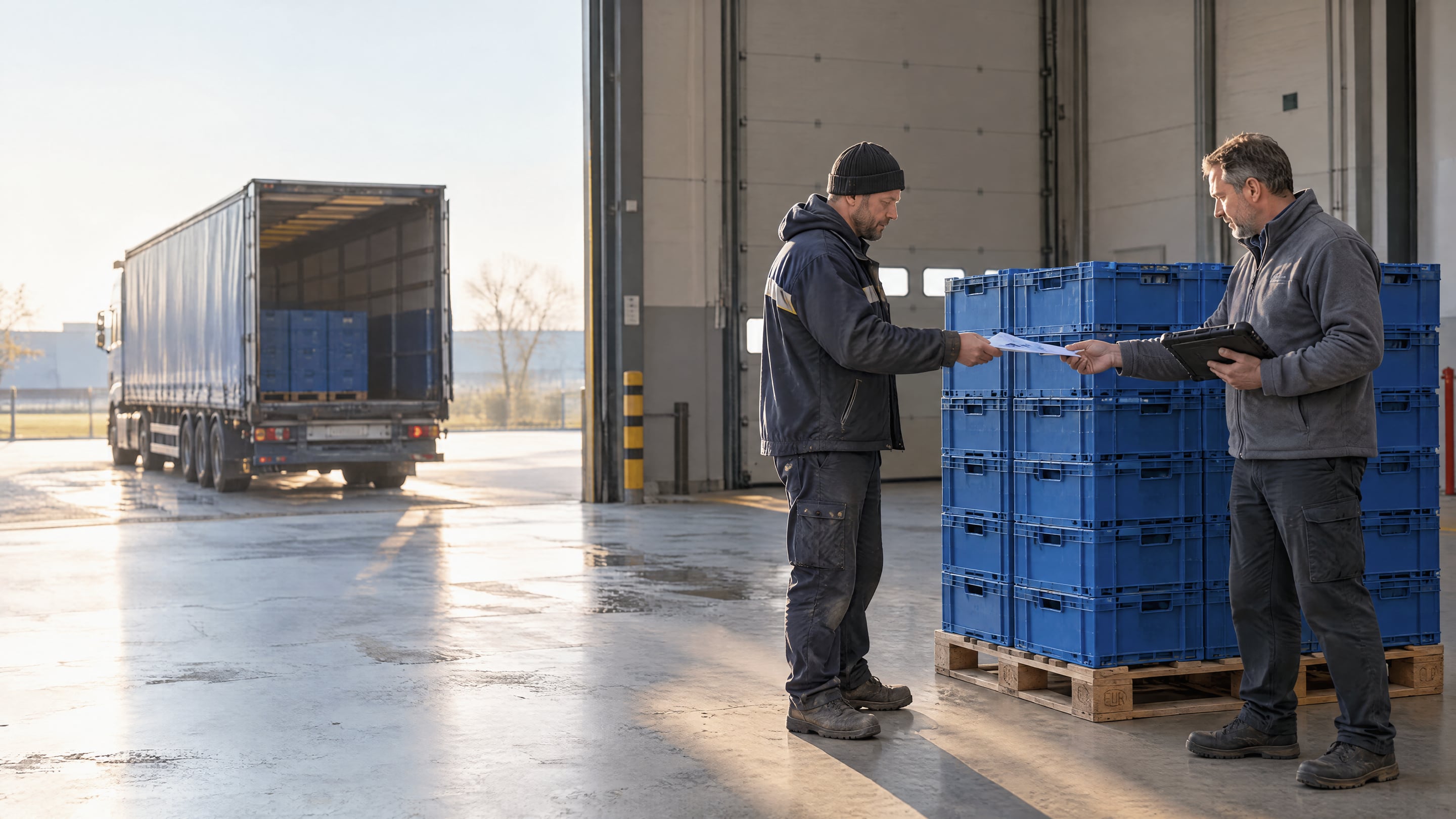 IMG 052 · DC Zellik · 50.8889N 4.2725E
Most teams go live in weeks, on the codes already on their fleet.
AI assistant · answers about Rotion
Hi. Ask me anything about Rotion: how it tracks crates, pallets, kegs and IBCs across partners, what Autopilot does, pricing, or PPWR.