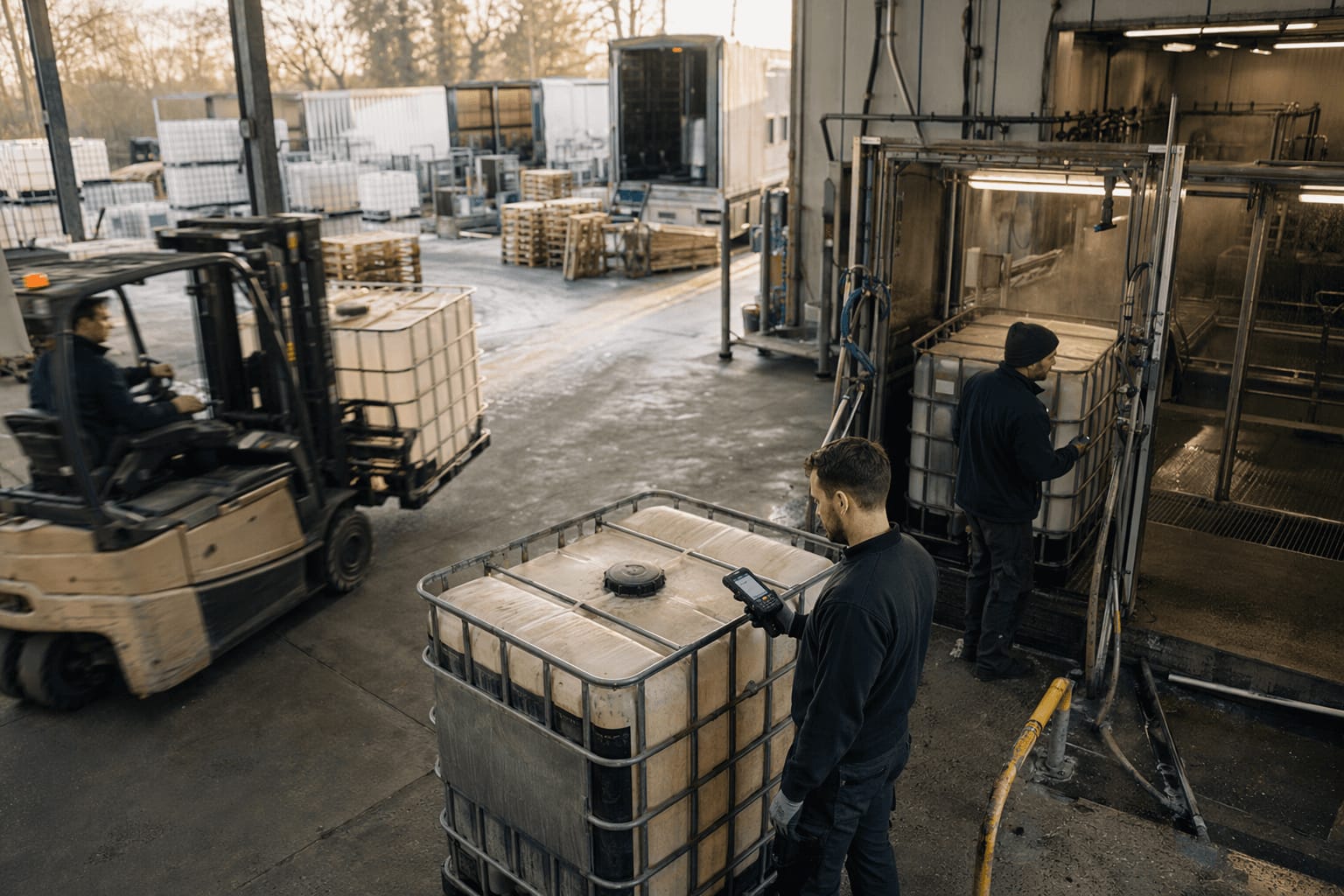
Containers stand still at customers.
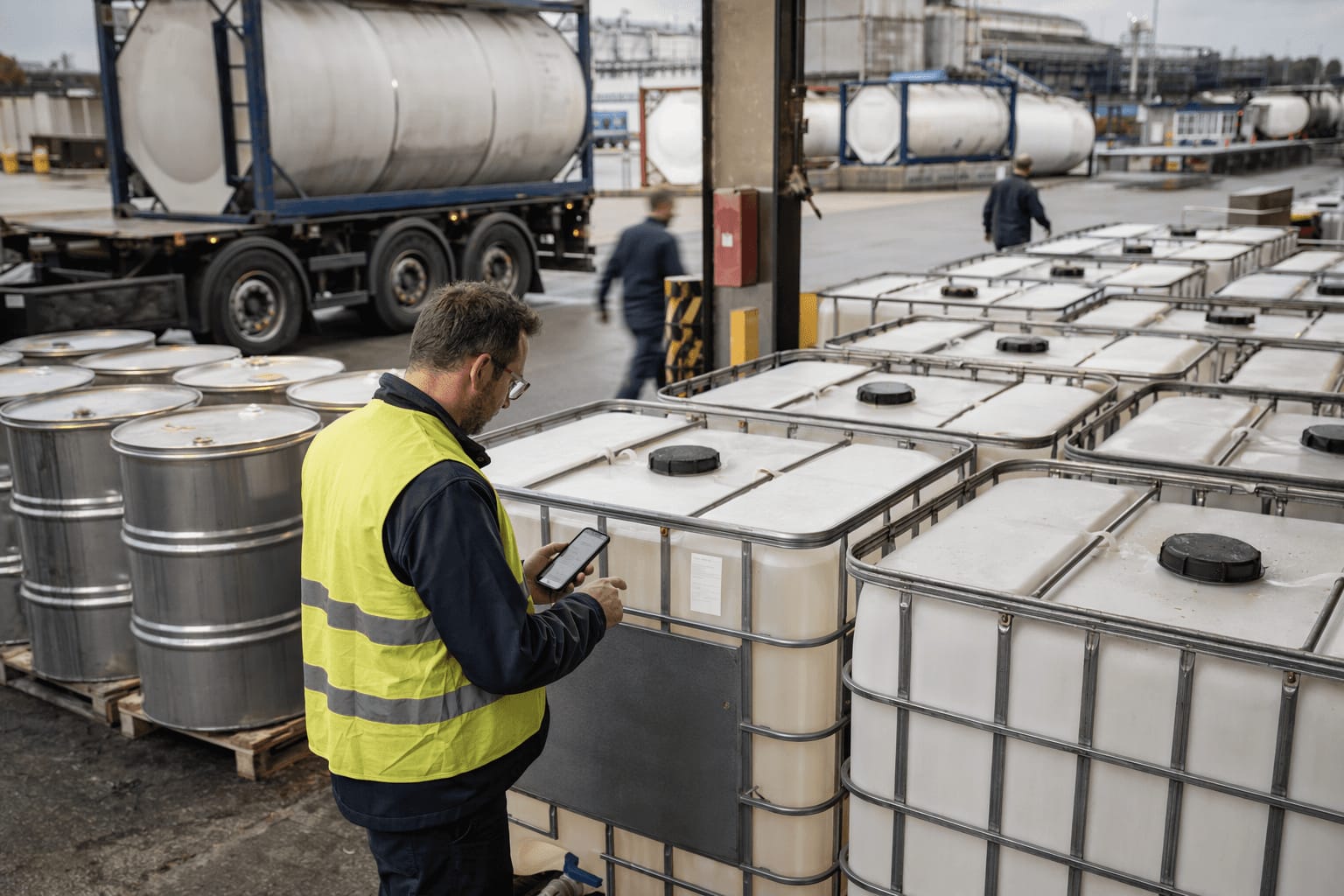
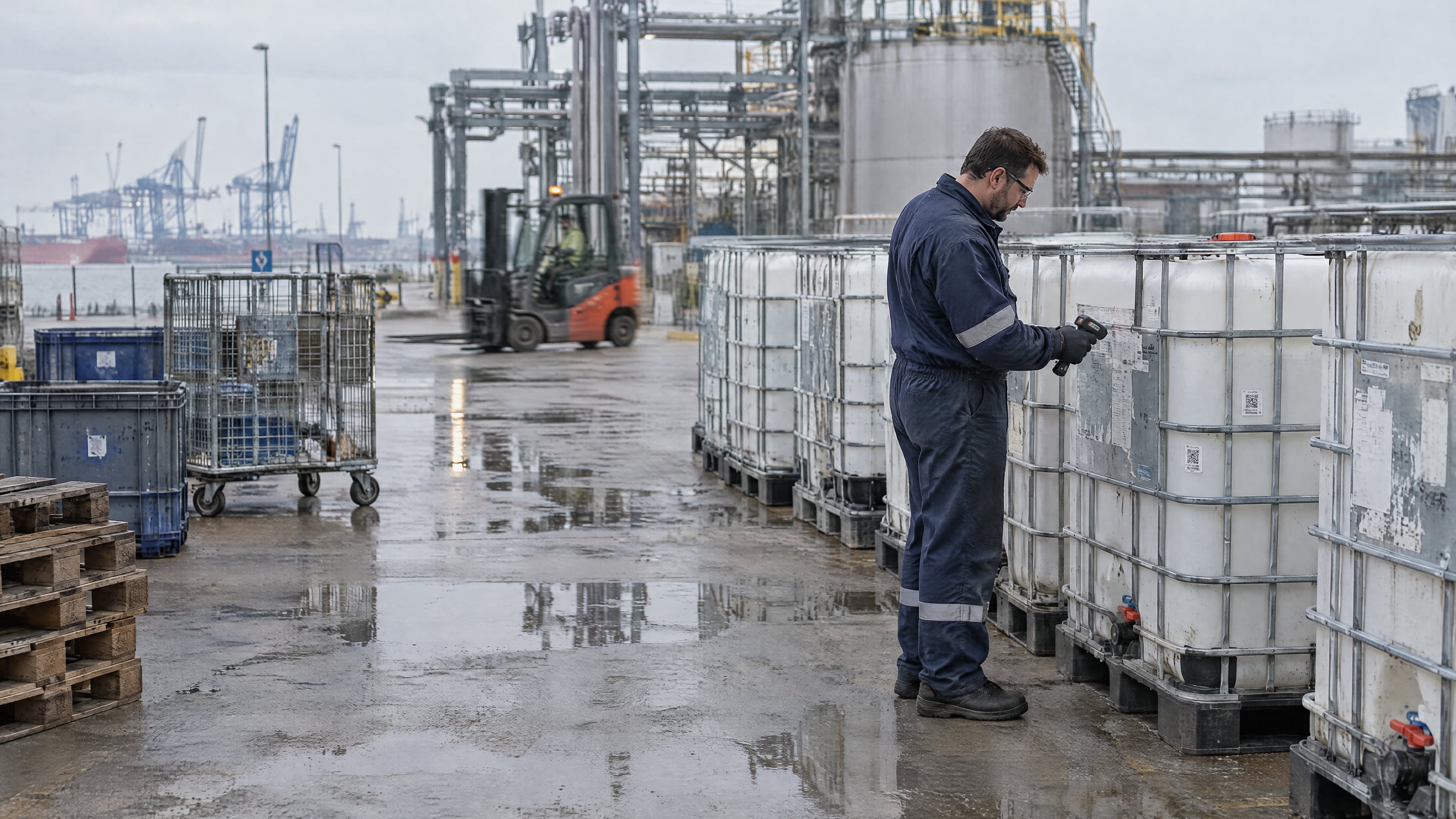
Full or empty, a large share of any IBC fleet waits at customer sites. Without dwell data per site, collection runs follow habit.
IBC tracking software
Rotion gives every intermediate bulk container a digital identity. See which IBCs sit at which customer, what each one last carried, and when it was cleaned and inspected.
IBC tracking software records where each intermediate bulk container is, who holds it, what it carried and when it was cleaned, inspected and refilled. Rotion does this per container across chemical and food producers, fillers, customers and reconditioners, on the serials, QR codes or RFID tags your IBCs already carry. Site balances, deposits and cleaning trails then come from scans instead of spreadsheets.
IBCs spend most of their life on other people’s sites. Spreadsheets lose the trail at the second handover, and every container that does not come back is bought twice.
Full or empty, a large share of any IBC fleet waits at customer sites. Without dwell data per site, collection runs follow habit.
For food-grade and chemical flows, an IBC without a documented cleaning cycle is a liability. Paper records do not travel with the container.
Containers change state at cleaning and repair partners. When nobody scans there, that is also where they disappear.
Every container carries its own data plate in Rotion: what it carried, when it was cleaned, when it is due for inspection and who holds it now.
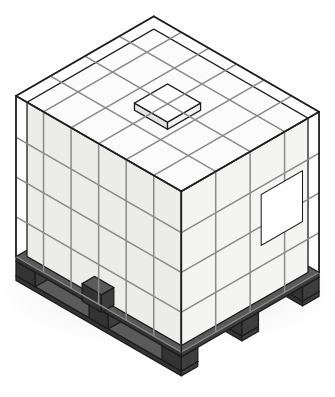
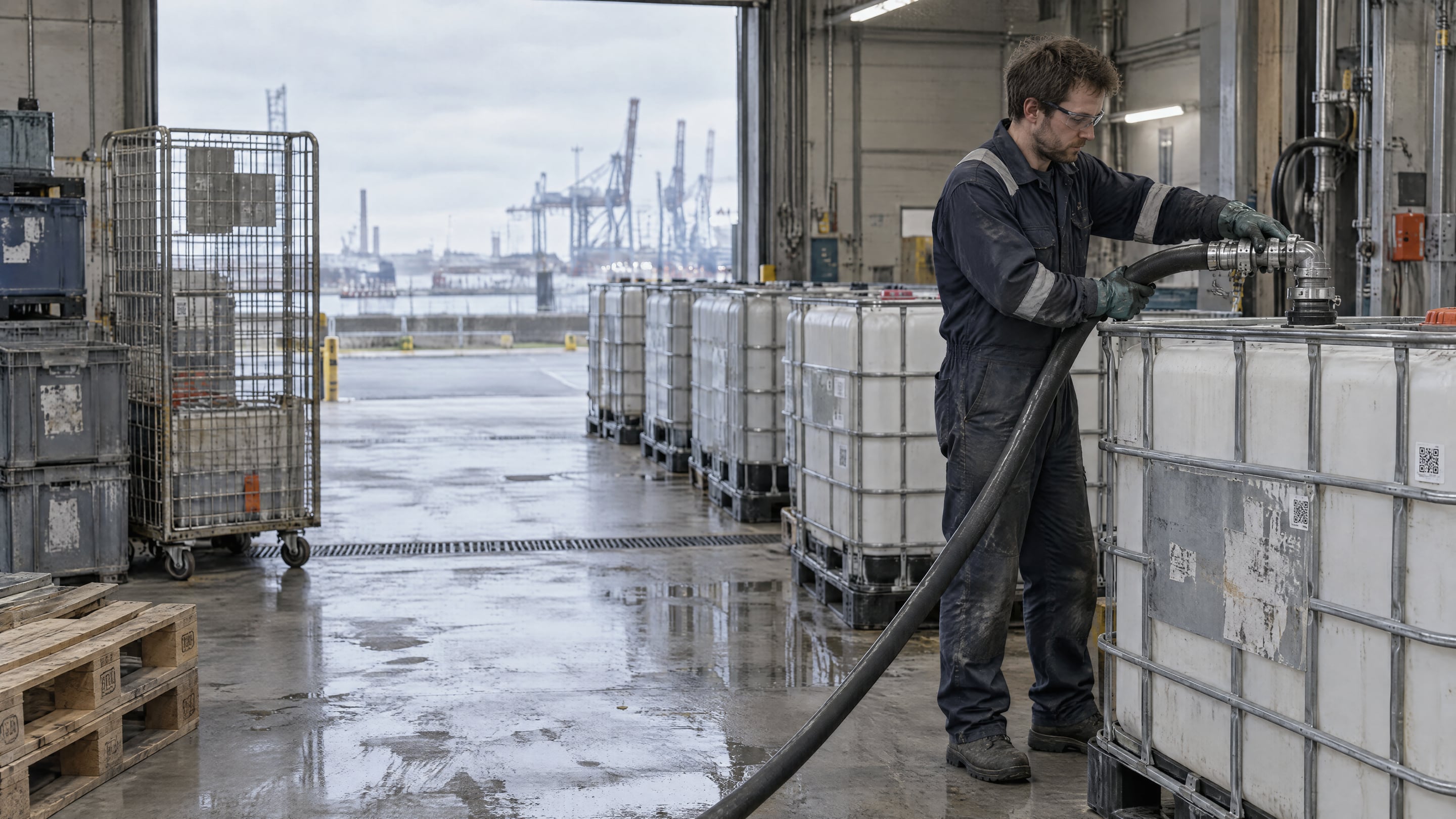
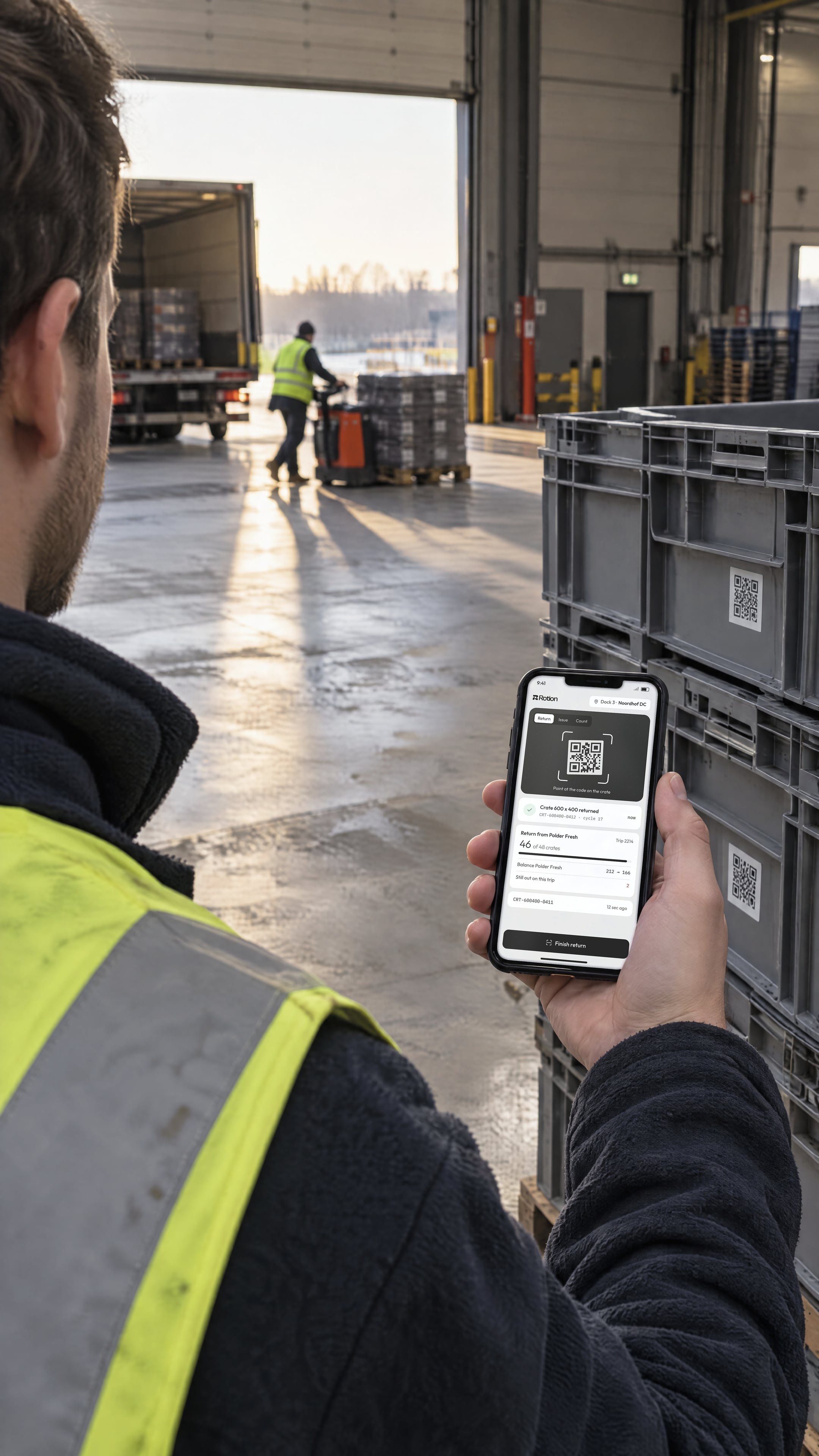
Scans at dispatch and return fit existing warehouse steps. Customers and service partners confirm with any phone.
The IBC is filled and scanned out. Product, batch and customer attach to that container.
Custody moves to the customer site. Dwell time and the deposit start counting.
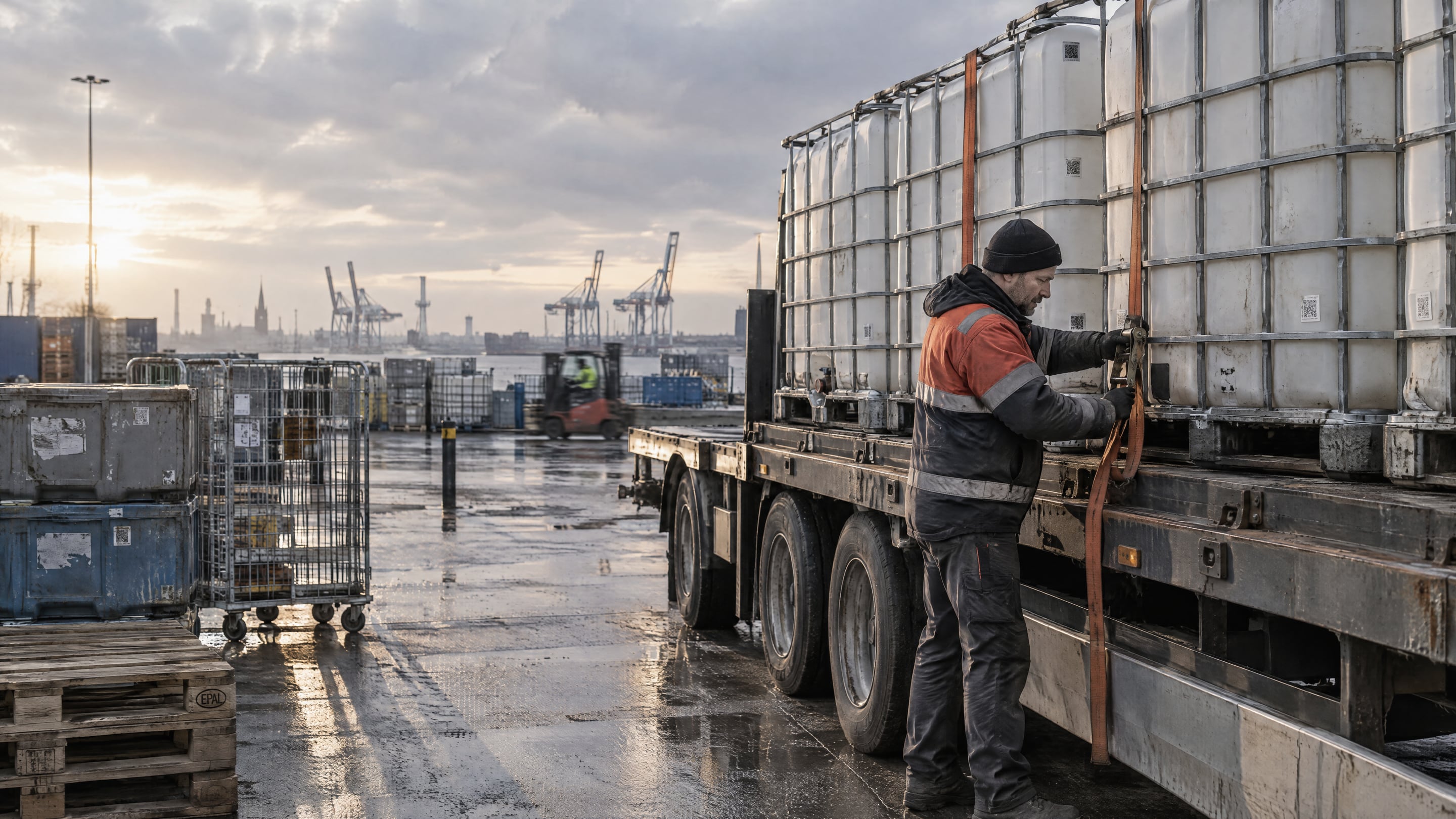
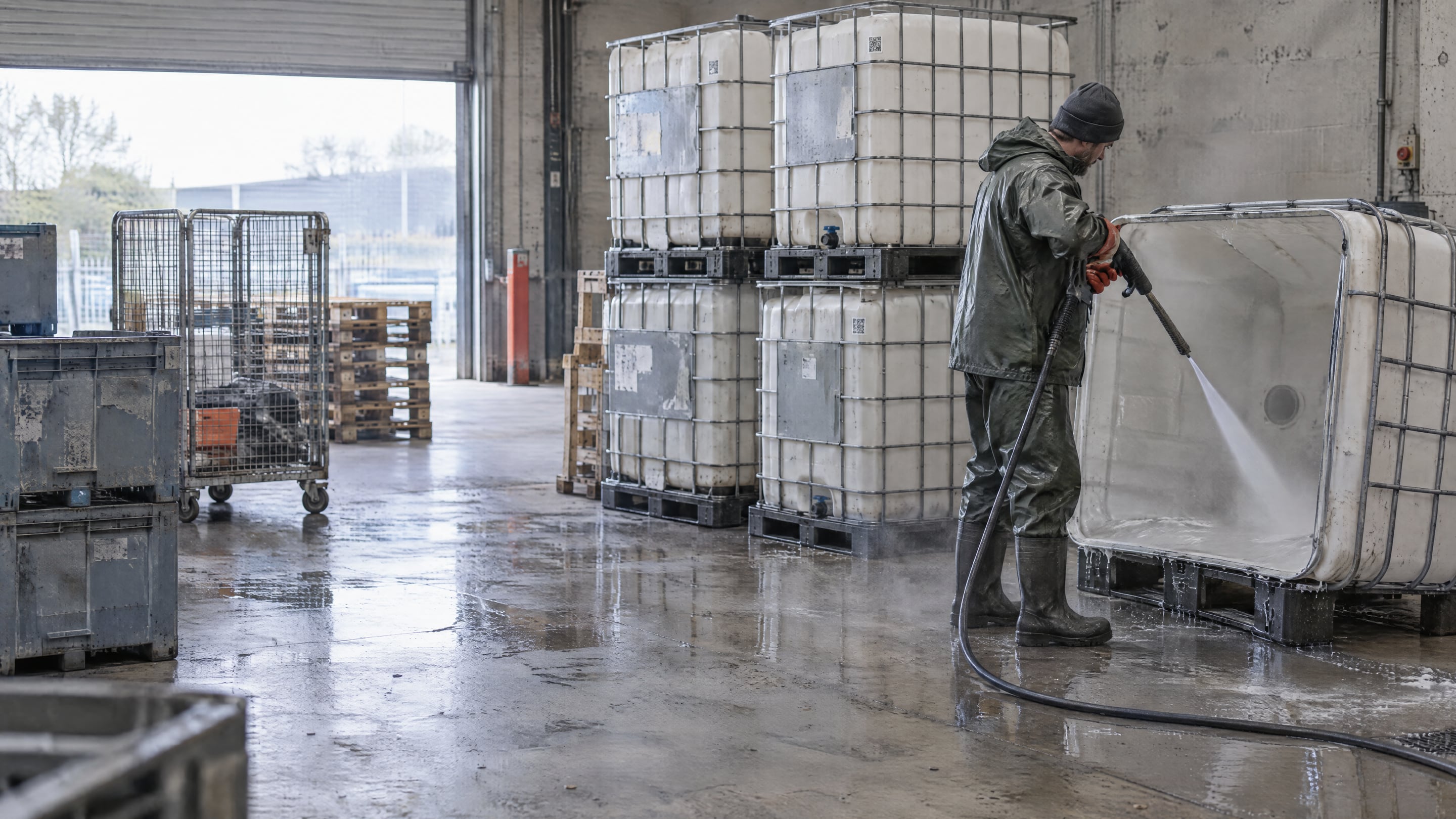
The empty IBC is collected and scanned into the cleaning partner. The cleaning cycle logs on the container.
Inspection and the next test date are recorded. Only released IBCs go back to filling.
Start from the LOT on one IBC, or search by batch or any content data. Rotion lists every IBC that carried it, who holds it now and whether it was cleaned since, ready to export for the auditor.
| Serial | Current holder | Cleaned since | Status |
|---|---|---|---|
| 0x7C41 | Filler 07 | Yes | Ready to fill |
| 0x7C3A | Customer 22 | No | At customer |
| 0x7B12 | Customer 31 | No | At customer |
| 0x7D08 | Customer 09 | No | At customer |
| 0x6F21 | Partner South cleaning | Yes | Cleaned |
| 0x7C55 | Partner South cleaning | Yes | Cleaned |
| 0x71E0 | Filler 07 | Yes | Ready to fill |
| 0x7A9C | Filler 07 | Yes | Refilled |
| 0x7C02 | Customer 14 | Yes | Refilled |
| 0x6E77 | Depot North | Yes | Cleaned |
| 0x7D1F | Depot North | Yes | Cleaned |
| 0x7B88 | Inspection partner East | Yes | In inspection |
| 0x72C4 | Filler 03 | Yes | Ready to fill |
| 0x7C60 | Partner South cleaning | Yes | Cleaned |
Everything a filler or processor needs to run IBCs across customers, cleaning partners and regions. Pick a feature to see it.
Explore the platform History per IBCBalance per siteDeposits and settlementsRotation and dwell time Autopilot
| Customer | Out | Back | Open | Dwell |
|---|---|---|---|---|
| Store 2214 Ghent | 1,240 | 1,196 | 44 | 5 d |
| Customer 14 | 860 | 648 | 212 | 21 d |
| DC Zellik | 2,310 | 2,287 | 23 | 2 d |
| Grower Hoogstraten | 1,580 | 1,531 | 49 | 7 d |
| Store 0917 Leuven | 640 | 611 | 29 | 6 d |
Each IBC carries its 2.5-year inspection and 5-year test date. Rotion counts what falls due each month, blocks filling or dispatch once a date has passed, and checks the last contents at every filling scan.
Route the 6 overdue IBCs to the inspection partner. 2 already sit at Partner South, so one collection covers them.
Custom plan. Acts only on approval.The filling scan reads the last contents and the cleaning record before a drop goes in.
Field results from operators running Rotion across pools, retail and industry.














Horizons ISG in the USA uses Rotion for its IBCs to optimize the reuse flow.
IBC fleet, USA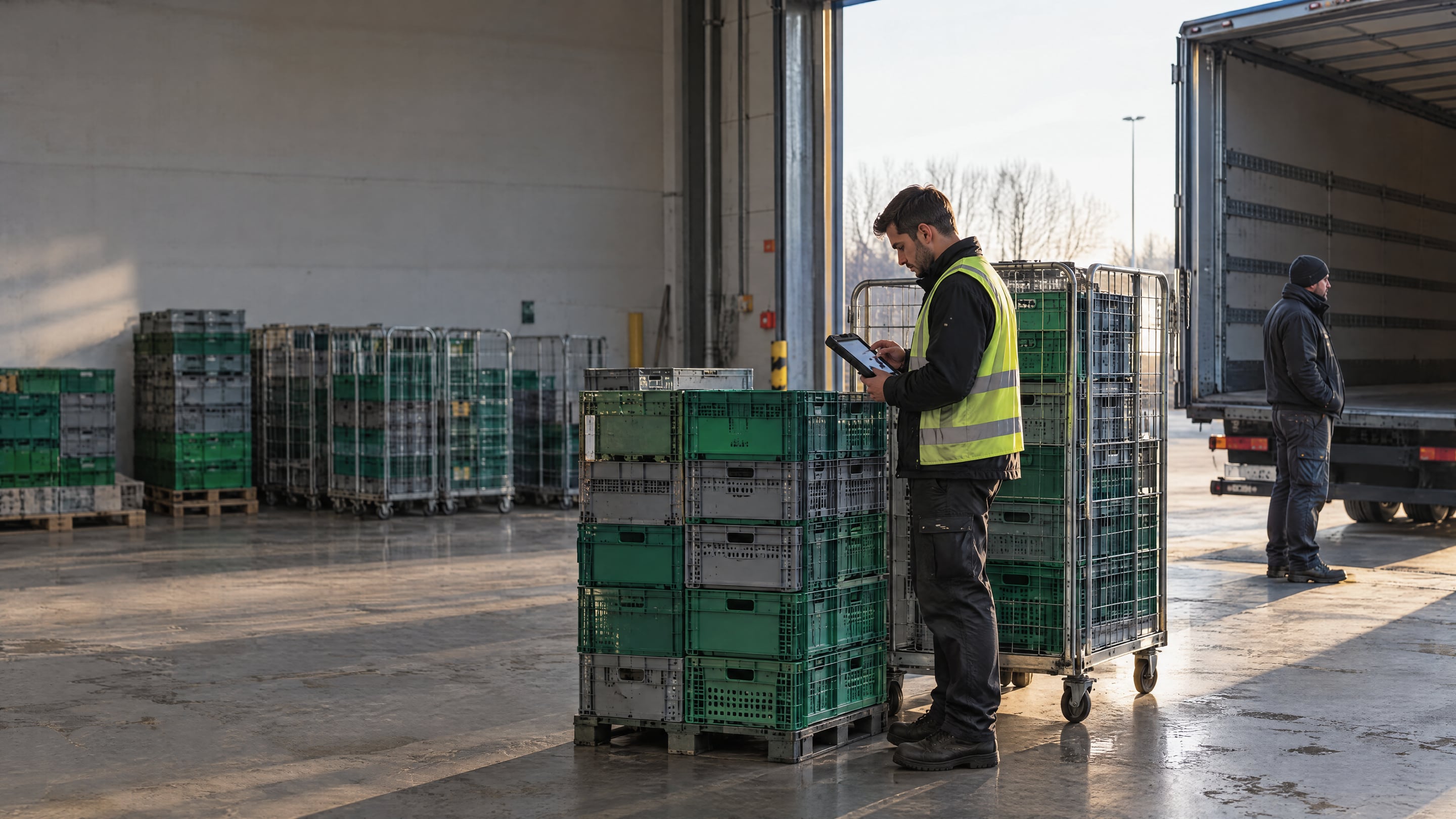
Per-container cleaning trails turn quality audits into a lookup, and blocked containers stop entering the wrong loop.
Site-level dwell data shows where containers wait, which customers need collection runs, and how much fleet you could release.
UN-marked IBCs carry periodic inspection and test dates. With the date on the record, a container due for testing does not go out full.
No. Rotion runs alongside your ERP and logistics systems and fills what they do not cover: container-level history, loss patterns and per-site balances. Connectors exist for SAP, Odoo, WMS and TMS.
Yes. Rotion reads QR codes, barcodes, RFID and GS1 GRAI identifiers, and existing serials can be linked to a code. Relabeling is usually not needed.
Yes. Product and batch attach to the container at filling, and cleaning cycles log against it. Whether an IBC can be refilled with a given product becomes a lookup.
No. A QR sticker is enough: Rotion records handovers by scan, with no device or data plan per container. Sensors are optional, whether BLE, RFID, 4G or any other, and their readings land on the same record. For a comparison with sensor-based tools, see the best IBC and tote tracking software.
Yes. Search by batch, LOT or other content data and Rotion lists every IBC that carried it, who holds it now and whether it was cleaned since, ready to export for an audit.
Yes. Each IBC carries its periodic inspection and test dates, the 2.5-year inspection and the 5-year test under UN and ADR rules. Rotion can block filling or dispatch once a date has passed, and the filling scan warns about the last contents or a missing cleaning.
Every IBC has a holder and a location at all times. Autopilot flags sites holding containers too long and proposes a collection, so recovery is routine instead of a write-off. Read more in how to reduce IBC losses across partners.
 IMG 052 · DC Zellik · 50.8889N 4.2725E
Most teams go live in weeks, on the codes already on their fleet.
AI assistant · answers about Rotion
Hi. Ask me anything about Rotion: how it tracks crates, pallets, kegs and IBCs across partners, what Autopilot does, pricing, or PPWR.