Deposits do not cover the keg.
Deposits are often a fraction of what a new keg costs. A venue that keeps or scraps a keg can still come out ahead.
Keg tracking software
Rotion gives every keg a digital identity. See which distributor or venue holds which kegs, how fast they come back, and which ones never do.
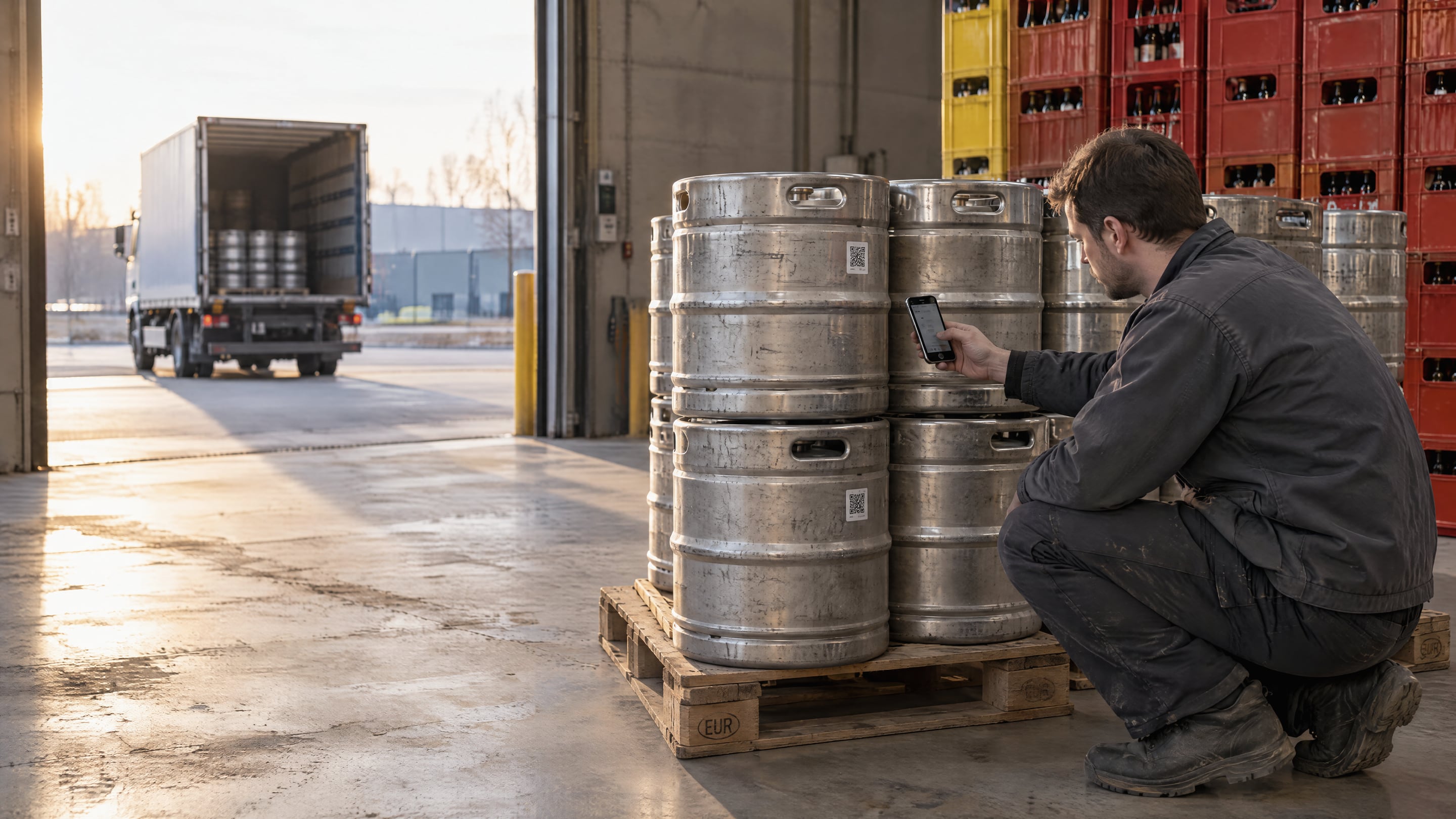
Keg tracking software records where each keg is, who holds it and how it moves between breweries, distributors and venues. Rotion does this per keg, on the QR, barcode or RFID codes already on your kegs. Venue balances, deposits, dwell time and losses then come from scans at drop-off and pickup instead of deposit lists and annual keg counts.
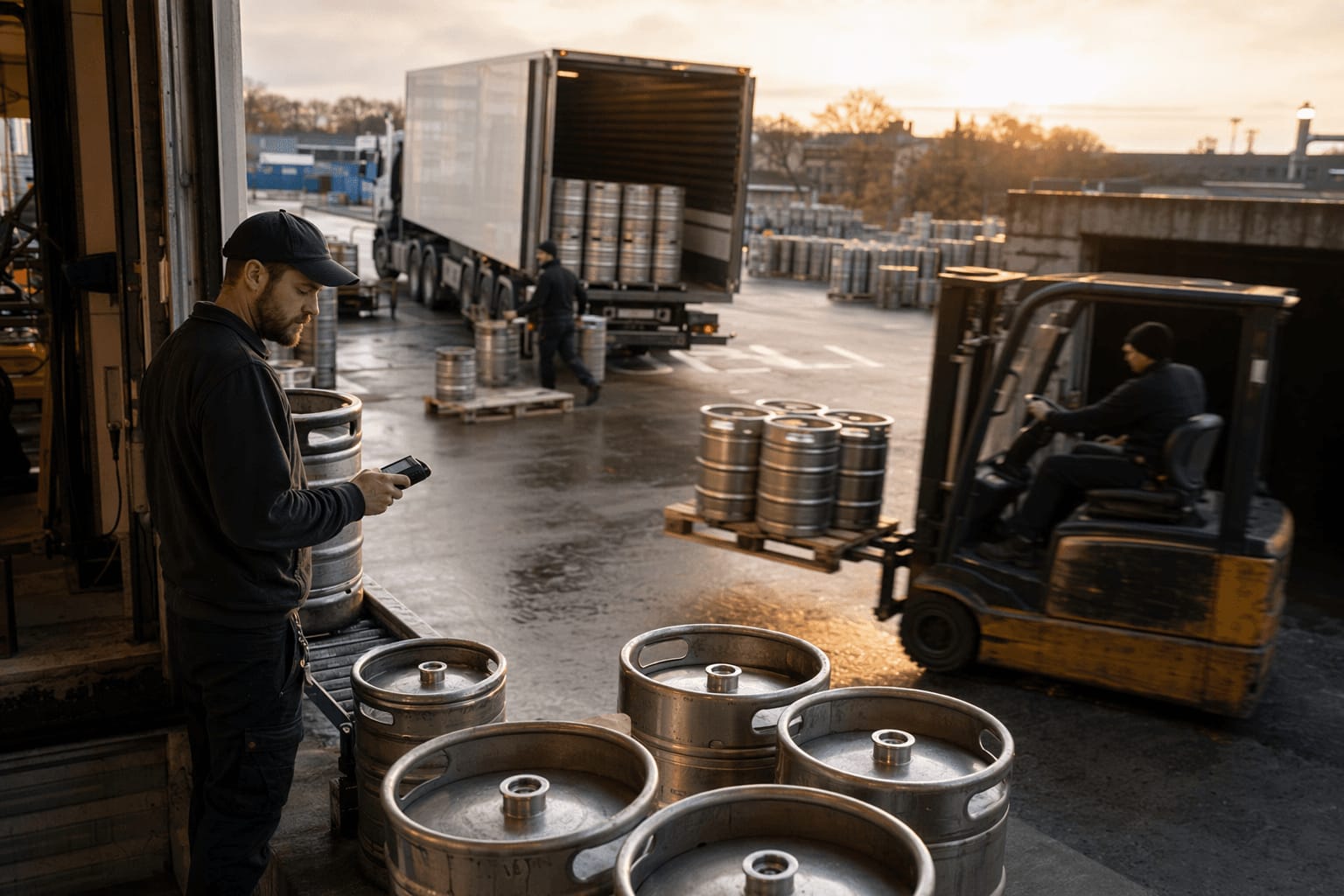
Kegs leave with every delivery and come back on the venue’s schedule. Deposit lists lose track as volumes grow, and every lost keg is bought twice.
Deposits are often a fraction of what a new keg costs. A venue that keeps or scraps a keg can still come out ahead.
Most keg histories go cold at the distributor. After that step, nobody can say which venue holds which keg.
Kegs stand full in cellars and empty behind bars. Dwell time drives the size of the fleet you need more than breakage does.
Each handover is a scan on the codes already on the keg. Kegs that go through a distributor stay on the same record as kegs you deliver yourself, so you see where the fleet sits and how long each stage holds it.
A distributor joins on its own login and sees only the kegs it holds. Its drivers scan at drop-off and pickup with the Rotion app, so nobody starts an IT project.
 Kegs / Partners
Signed in as the brewery · all partners
Signed in as Distributor East · own venues only
Venue 31 has held 46 kegs for more than 40 days. It usually returns kegs in 14 days. Proposal: add a pickup at Venue 31 to Distributor East’s Friday route and send the venue its balance.
Autopilot proposes, on the Custom plan. A person at Distributor East approves before anything changes.
Sorted by days held · 4 of 86 venues
The brewery invites the distributor. It gets its own login, scoped to the kegs it holds.
Drivers use the Rotion app on their phones at drop-off and pickup. Nothing to install on site.
Both sides read the same record, so the count at the warehouse matches the count at the brewery.
Everything a brewery or distributor needs to run kegs across direct delivery, wholesale and events. Pick a feature to see it.
Explore the platformBalance per venueDeposits and settlementsRotation and dwell timeFleet status Autopilot | Customer | Out | Back | Open | Dwell |
|---|---|---|---|---|
| Store 2214 Ghent | 1,240 | 1,196 | 44 | 5 d |
| Customer 14 | 860 | 648 | 212 | 21 d |
| DC Zellik | 2,310 | 2,287 | 23 | 2 d |
| Grower Hoogstraten | 1,580 | 1,531 | 49 | 7 d |
| Store 0917 Leuven | 640 | 611 | 29 | 6 d |
Each charge and each refund on a venue statement ties to the scan behind it. When a venue questions its balance, the statement answers with the keg, the date, the route and the time.
Sample dataShowing 10 of 23 scan lines
Keg deposits are commonly 15 to 20% of replacement value (Brewers Association).
Custody per keg stops the loss deposits cannot. A scan at every handover shows who held the keg last, and that is the party you collect from.
Venue 31 says it returned KEG 0x2C14 early. The record shows two scans on Friday route 4.
Deposit charged and refunded once each. Nothing open on this keg.
Field results from operators running Rotion across pools, retail and industry.














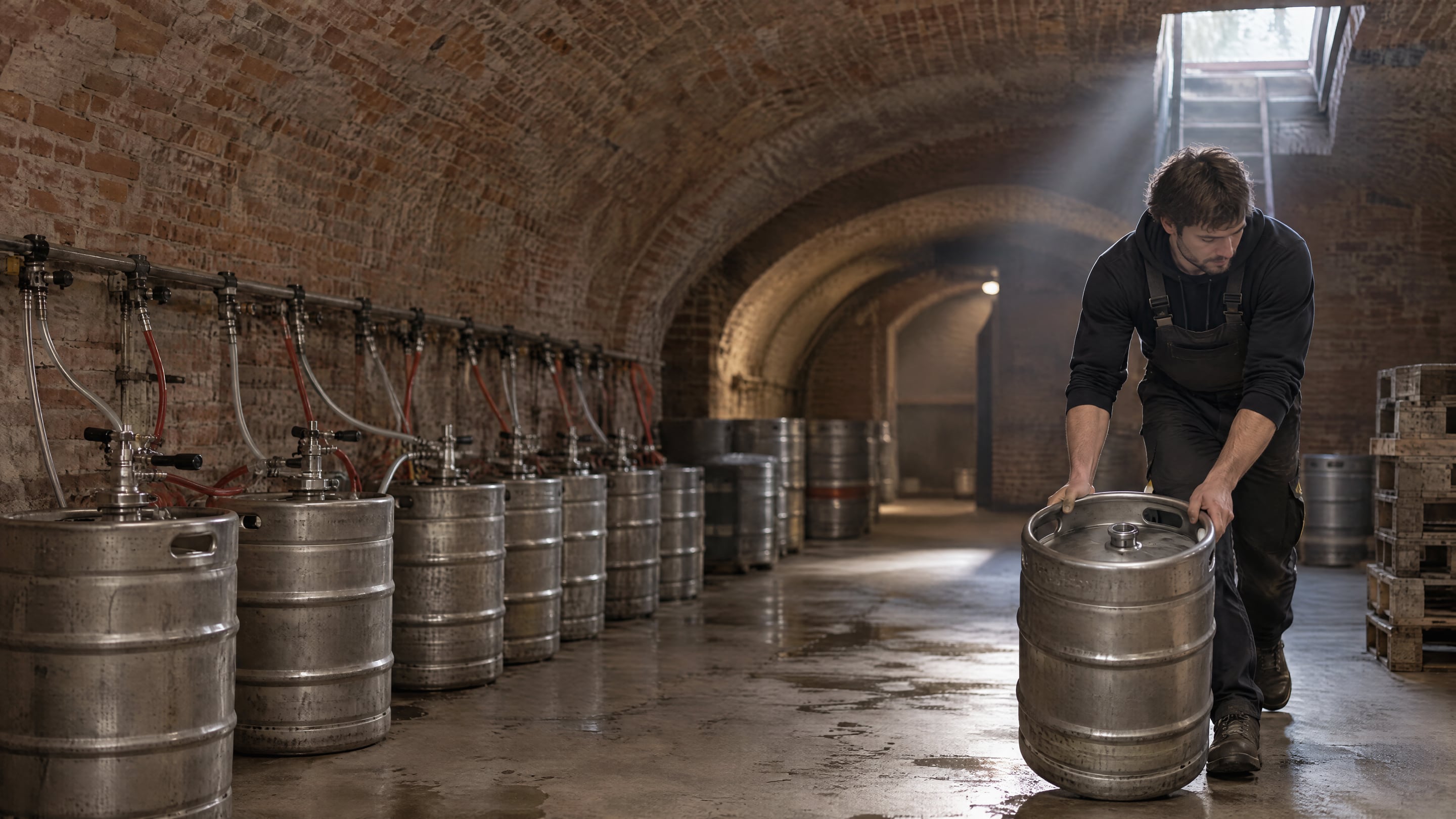
Per-venue dwell data shows which accounts turn kegs in days and which hold them for weeks.
Summer and festival peaks mask kegs that never return. With an identity per keg, you can tell seasonal float from real loss, and end-of-season recovery becomes a route plan.
Scanned handovers keep custody continuous across tiers, so deposit balances survive the step that used to erase them.
No. Rotion runs alongside your ERP and route planning and fills what they do not cover: keg-level history, loss patterns and per-customer balances. Connectors exist for SAP, Odoo, WMS and TMS.
No. Partners confirm handovers on the web or a phone, and drivers can scan for them. Adoption does not depend on every venue cooperating.
Yes. Rotion reads QR codes, barcodes, RFID and GS1 GRAI identifiers, so relabeling is usually not needed.
No. Kegs usually remain brewery property, and deposits are commonly a fraction of replacement value, so they do not stop a keg from leaving the loop. Custody evidence per keg and fast follow-up on overdue venues do. See how to reduce keg losses across distributors and venues.
Every keg has a holder and a location at all times. Autopilot flags venues holding kegs too long and proposes a pickup or reminder, so recovery is routine instead of a write-off. Operators running Rotion report 28% fewer assets lost.
 IMG 052 · DC Zellik · 50.8889N 4.2725E
Most teams go live in weeks, on the codes already on their fleet.
AI assistant · answers about Rotion
Hi. Ask me anything about Rotion: how it tracks crates, pallets, kegs and IBCs across partners, what Autopilot does, pricing, or PPWR.