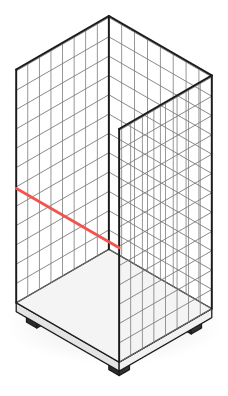
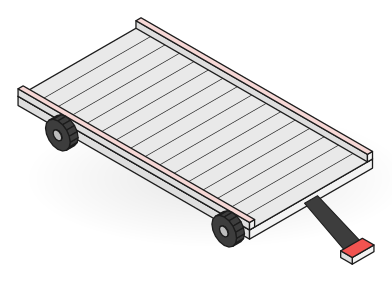
Infrastructure per hectare.
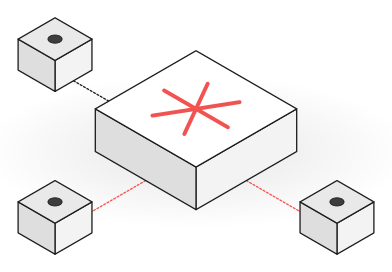
Gateways, gates and UWB anchors need power, mounting and network on every part of the site. Outdoors that adds up fast.

BLE asset tracking without gateways
Rotion reads BLE tags with the phones your staff already carry. As they walk the site, each phone picks up the tags nearby in the background, and Rotion merges those sightings into a position per asset. There are no gateways or readers to install.
BLE asset tracking with phones as readers puts a small Bluetooth Low Energy tag on each asset and uses the smartphones of the people on site to detect them, instead of fixed gateways. Rotion’s app scans in the background inside the site, places each sighting with the phone’s GPS and motion sensors, and merges sightings from several phones into one position per asset. Staff search by asset number and a radar guides them to it.
Tracking inside a building is a solved problem. A large, open site with thousands of items is where projects stop.
Gateways, gates and UWB anchors need power, mounting and network on every part of the site. Outdoors that adds up fast.
Handheld and RFID scans record a move only when someone remembers. One missed scan and the map is wrong.
A tracker with its own connection on every attachment or element costs more per item than many of them are worth.
The app runs in the background. Nobody opens it to make the map work.
A BLE tag goes on each asset and is linked to its number by a scan or a list import.

Inside the site geofence, phones pick up nearby tags in the background. Outside it they stop.

GPS and motion sensors place each sighting. Sightings from several phones merge into one position.

Search by number, walk to the spot, and the radar points out the last metres.

Each phone that crosses the site adds sightings of the tags it passes. More passes, firmer positions. Nobody scans.
Sample data on a fictional site. Phones are not shown by name.
A map that fills itself, and a record behind every dot. Pick a feature to see it.
Explore the platform Last seen per assetEvery move on recordUnusual movesERP and field apps Autopilot
| System | Data | Last sync |
|---|---|---|
| SAP S/4HANA | Orders and deliveries | 2 min |
| Odoo | Customers and stock | 5 min |
| WMS | Dock scans | live |
| TMS | Routes and stops | 14 min |
| Webhook | Autopilot actions | live |
Type the asset number, see where it was last seen and by how many phones, then let the radar take you the last metres.
Sample data.
Field results from operators running Rotion across pools, retail and industry.









Each extra phone on site adds sightings, so positions firm up as more people carry the app.
Parts of the site nobody walks show up on the map, so you see where coverage is thin.
Rotion reads BLE tags already on your assets, so you start without relabelling.
Gateway systems install fixed readers with power and network across the site. Rotion uses the phones that already move around the site as readers, so there is nothing to mount outdoors. Where a zone needs a fixed position, such as inside a hall, a few cheap BLE tags serve as anchors.
In a first field test, positions landed within 3 to 5 metres, depending on the signal conditions: an open yard does better than a hall full of steel. That is close enough to walk to the right row, and the radar on the phone guides you to the asset. We measure accuracy on your own site in the pilot.
No. The app scans in the background inside the site and shows only a small indicator. People open it only to search for an asset or use the radar, or they reach it through a link from the app they already use.
No. Rotion shows tag sightings only, never worker names or the routes people walk. The app scans only inside the site geofence and stops when a phone leaves it.
The app runs on the Android and iOS phones your staff carry. Rotion reads any BLE tag, including tags already on your assets, and can supply tags with replaceable batteries.
The map needs people walking the site every day. It fits sites with their own staff on foot, such as equipment yards, rental depots and stockyards, and fits less well where only rotating drivers pass through.
With a one-week pilot: 100 tags on assets in one busy zone, the app on the phones of the people who work there, and go or no-go criteria agreed up front. The pilot fee is credited to the first year.
 IMG 052 · DC Zellik · 50.8889N 4.2725E
Most teams go live in weeks, on the codes already on their fleet.
AI assistant · answers about Rotion
Hi. Ask me anything about Rotion: how it tracks crates, pallets, kegs and IBCs across partners, what Autopilot does, pricing, or PPWR.