
Short answer: Roll cages and dollies go missing at handoffs, between the moments anyone counts them. To stop the losses, record every transfer as a custody event with operator, time, site and condition, give each late or missing return a named owner, and close those exceptions daily. One event model can serve EU and US reporting.
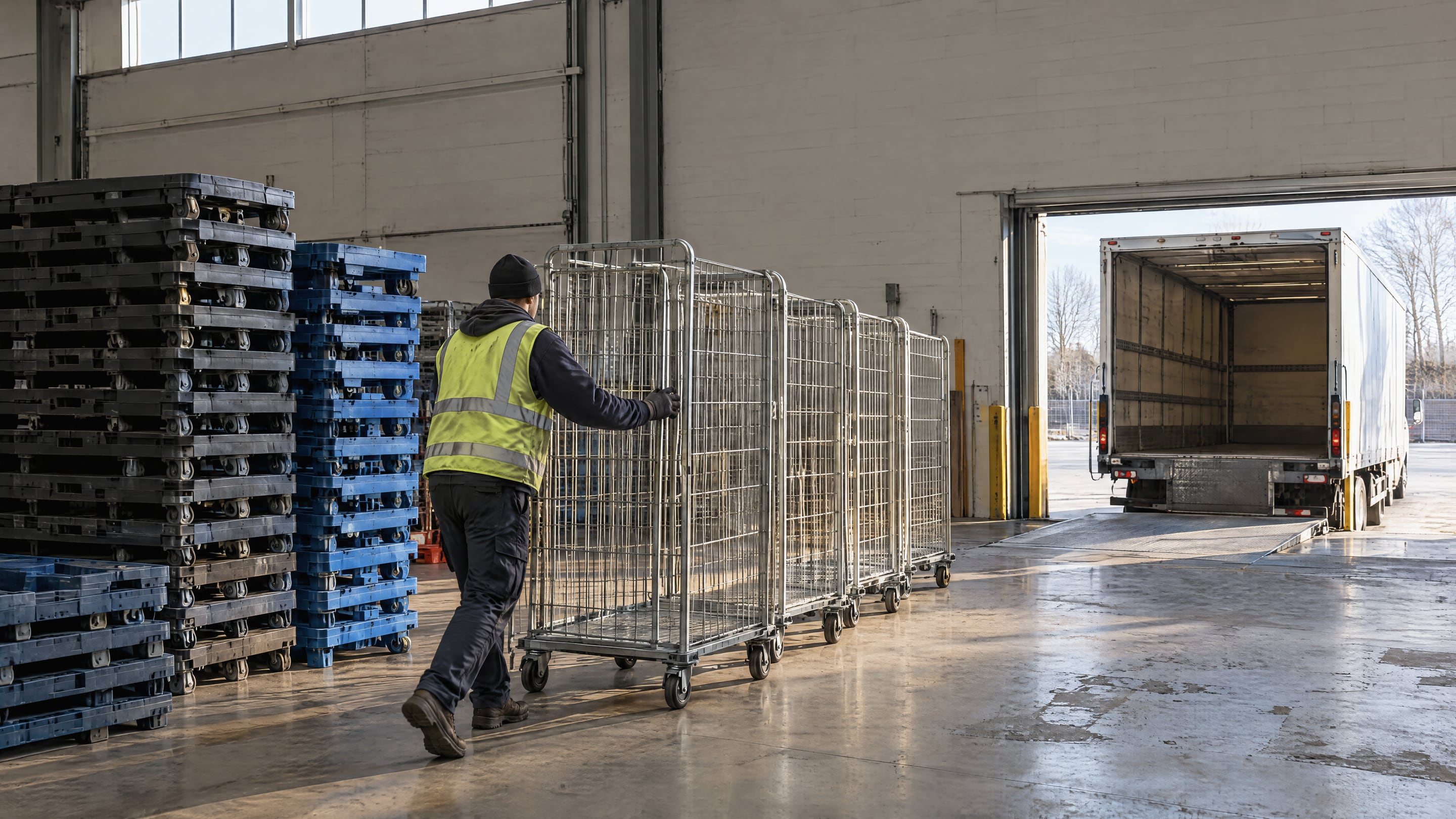
Roll cages and dollies get lost the way most returnable transport items do. Teams can count the units, but accountability slips at each handoff. When a loop runs through a warehouse, stores, carriers and service partners, a monthly balance file will tell you how many are missing. Custody events and quick exception ownership tell you where they went and who has to act.
Roll cage and dolly control at a glance
- Treat every transfer as a custody event. Count snapshots help, but loss starts between snapshots.
- Use one vocabulary for EU and US teams. Roll cages, roll containers, dollies, RTP and returnable containers sit in one data structure.
- Standardize handoff proof. Operator, timestamp, site and condition are mandatory fields.
- Close exceptions daily. A missing return without an owner turns into a write-off.
- Let finance work from the same record. Deposits, claims and replacement approvals use the event record operations already keeps.
Why do roll cages and dollies keep disappearing even when counts still reconcile?
They disappear because teams reconcile volume, while the losses sit in custody. A total that balances can still hide late returns, returns to the wrong site and condition disputes that never reached an owner. The spreadsheet looks stable while unresolved handoffs pile up underneath it, and each one is harder to recover the longer it waits.
The same failures come back in most loops:
- dispatch is recorded, but receipt confirmation is late or partial
- roll cage condition is logged as photos in a chat group instead of in the operational record
- damaged or quarantined units drop out of availability without a reason code
- disputed movements wait for the month-end review, when there is little left to recover
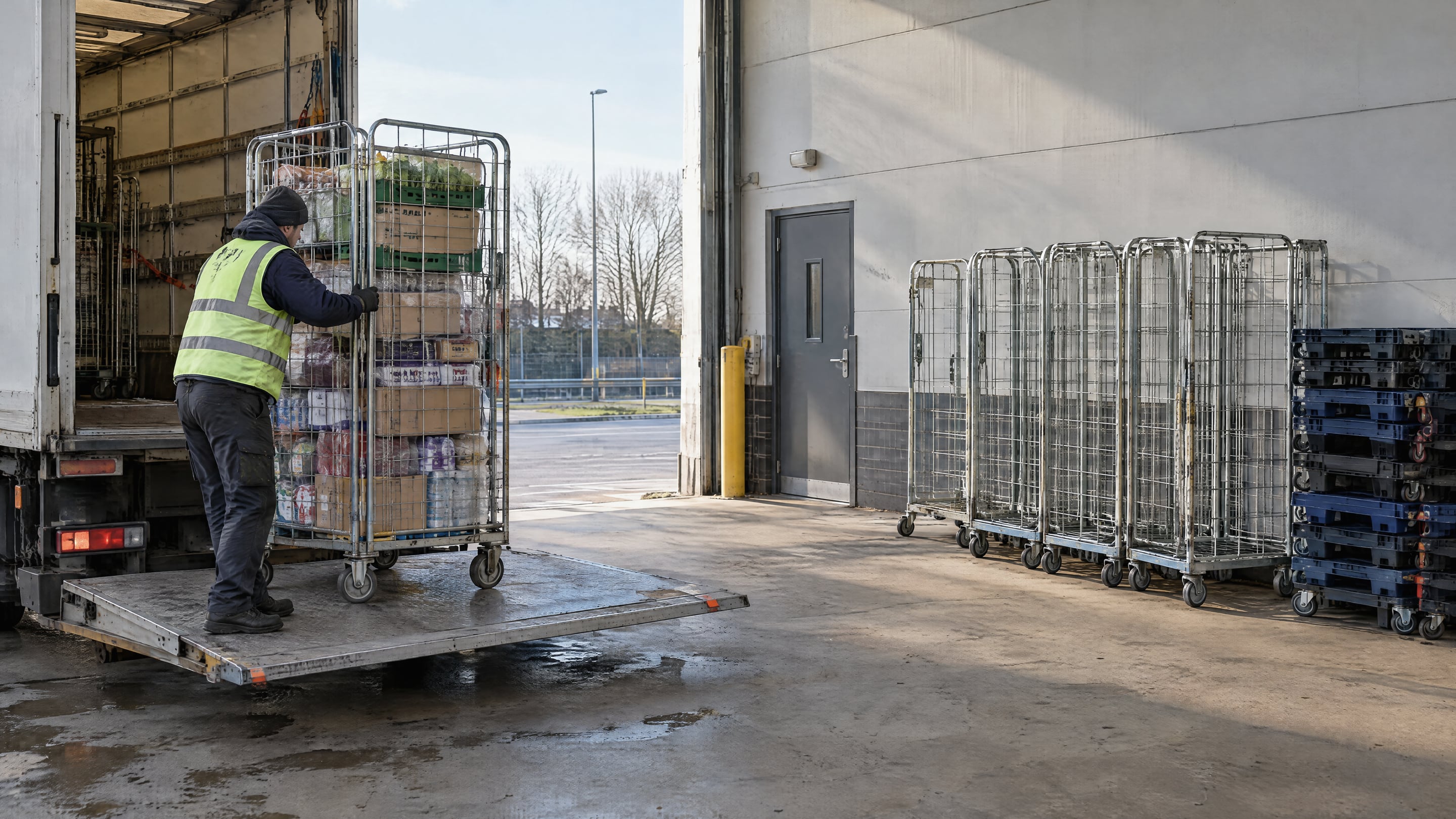
Front-line handling matters here too. HSE guidance on roll cages points to heavy loads, limited forward visibility with taller units, and recurring manual-handling injuries in operations that move cages often (see also the HSE leaflet INDG478). When daily handling is hard, people skip the scan, and the data gets worse with it. The control design has to fit how the work is actually done.
What does a reliable roll cage and dolly tracking loop look like across partners?
A reliable loop is one workflow across all partners, from allocation to verified return, with a named owner for every exception. It does not split along partner systems. Every party follows the same event contract, with the same minimum evidence and the same rules on who answers for what, so a handoff recorded by a carrier reads the same as one recorded by a store.
We use a five-step control loop:
- Allocate and issue
- Assign a roll cage or dolly identity and an expected return window.
- Store asset type, lane and receiving counterparty.
- Dispatch with handoff proof
- Capture operator, timestamp, origin site, destination site and quantity.
- Attach the transfer or shipment reference.
- Receive and verify condition
- Confirm full or partial receipt at the destination.
- Record condition status, with evidence when something is wrong.
- Return and re-circulate
- Confirm the return site and accepted quantity before the next issue.
- Send damaged or quarantined assets down their own path.
- Run daily exception closure
- Route late, missing, mismatched and condition-disputed movements automatically.
- Keep an owner and a due date on each one until it closes.
GS1 standards fit this model. GRAI is a standard identifier for reusable transport assets, and EPCIS is a standard way to share visibility events between companies. When a loop crosses several legal entities, these two standards are the quickest route to handoff evidence that every party can compare.

What should roll cage and dolly tracking software capture at every handoff?
Roll cage and dolly tracking software should capture the fields you need to assign accountability and settle a dispute quickly, and little more. What you are measuring is how fast exceptions close. If the mandatory fields become optional when a shift is under pressure, the same disputes come back, only now with nicer dashboards.
A practical minimum handoff record:
- Asset identity: roll cage or dolly identifier, asset class, status
- Counterparty: sender, receiver, and the legal owner where relevant
- Time and place: handoff timestamp, origin, destination, lane
- Condition: accepted, damaged, quarantined or missing, with links to evidence
- Actor: the operator or role that completed the event
- Exception routing: reason code, owner, due date, closure note
One test helps. If finance or operations cannot settle a dispute from a single event timeline without searching email, the record is missing something.
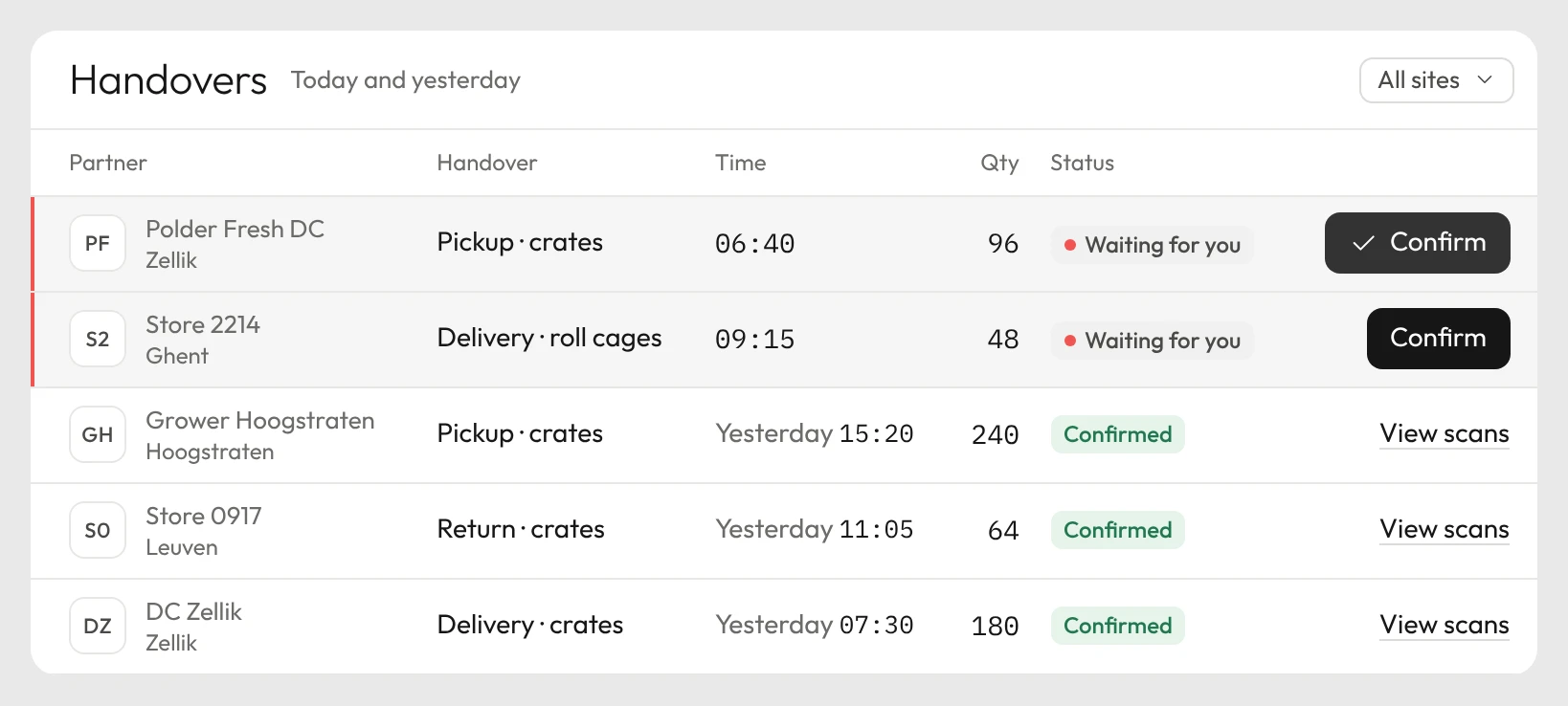
This is the same custody model we use for pallet tracking and crate tracking, and the Rotion platform runs it for every asset type in one loop.
How do EU and US compliance pressures affect roll cage and dolly operations?
EU and US teams can run one tracking model for roll cages and dollies, as long as the reporting views follow local rules. In the EU, PPWR pushes for structured packaging accountability and measurable reuse. In US states with packaging EPR, producers have reporting and funding obligations, and those still depend on movement data they can trust.
Keep one operations dataset and cut a view per market:
- EU view: custody and return evidence for packaging accountability under Regulation (EU) 2025/40
- US view: producer reporting and obligation support for state EPR programs
Examples from current public rules:
- Washington’s Recycling Reform Act requires producers of covered products to register with a Producer Responsibility Organization, report data, and pay fees starting in 2026.
- Oregon’s Recycling Modernization Act requires producers of covered products to register with an approved PRO, report supply data, and pay fees.
- Minnesota’s Packaging Waste and Cost Reduction Act sets up an EPR framework and states that after January 1, 2032, covered packaging and paper products must be refillable, reusable, recyclable or compostable.
If you cannot trust the custody and condition events for each handoff, every compliance report becomes an expensive manual reconstruction.
What is a practical 30-day rollout for roll cage and dolly control?
A 30-day rollout should prove control on one difficult lane before you deploy more widely. Month one is about making missing assets and disputed handoffs visible, giving each an owner, and closing them faster, with one shared process that operators will actually use. Platform coverage can wait until that works.
A month-one plan:
- Week 1: scope one lane
- Pick a lane with recurring losses or frequent disputes.
- Fix the mandatory event fields and the exception reasons.
- Week 2: start live capture
- Turn on dispatch, receipt and condition capture at the handoff points.
- Check that every party can submit events against the same contract.
- Week 3: enforce exception ownership
- Route late and missing events to named owners every day.
- Track closure speed and repeat exceptions by reason code.
- Week 4: tighten and repeat
- Drop the fields nobody uses and keep the ones that settle disputes.
- Move to the next lane with the same record and the same rules.
Operators keep moving goods through all four weeks. By the end, managers know who owns each open exception, and finance has auditable evidence for claims, deposits and replacements. For the pallet version of the same dispute problem, see how to stop pallet losses and pooling disputes.
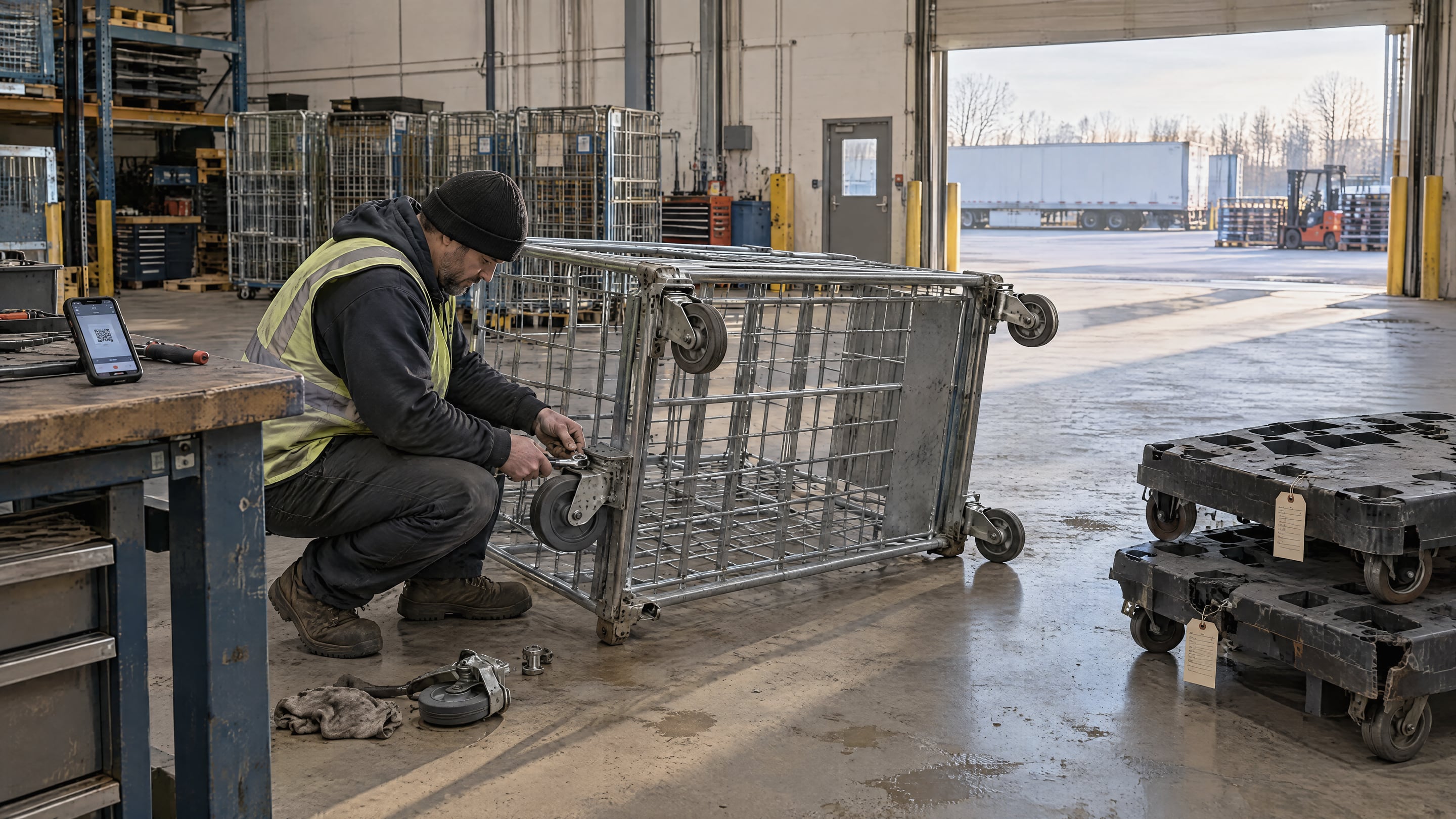
To try this on one lane, start with the self-serve version.
Frequently asked questions
Do we need RFID to start roll cage and dolly tracking?
No. Start with a capture method operators can carry out at every handoff, every time. Add more automated capture at the points where the same failures keep coming back.
Should roll cages and dollies use separate workflows?
Usually not. One custody model covers both when asset class, condition states and handling rules are set per lane.
What KPI should we prioritize first?
Exception closure time, and repeat exceptions by reason code. Asset counts alone do not show whether accountability is getting better.
Can one system serve both EU and US operations?
Yes. Keep one event model and generate reporting views per region. Operations stay in one place, and each market still gets the view its local rules ask for.