



Short answer: Do not wait for the 2027 acts to start your PPWR evidence model. The legal minimum number of rotations is still pending, but Article 27 reuse-system duties already apply. Start recording reusable units, handoffs, condition changes and returns now, so your team can prove circulation when calculation rules land.
Many teams ask the same question: if minimum rotation numbers are not final yet, what should we track today? The practical answer is to build an evidence record that works before and after the delegated and implementing acts. That protects operations now and avoids a data scramble in 2027.
Timeline at a glance
| Date | What changes | Status today |
|---|---|---|
| 12 Aug 2026 | Reuse-system duties apply under Article 27 and Annex VI Part A | In force |
| 12 Feb 2027 | Member States report to the Commission under Article 56(7) | Adopted |
| 30 Jun 2027 | Article 30(4) calculation rules for reuse targets apply | Pending act |
| 1 Jan 2030 | 40% transport-packaging target and 100% internal and same-country transport requirements apply under Article 29 | Adopted |
What does PPWR already require before minimum rotation numbers are published?
PPWR already requires operators to run a real reuse system, even though minimum rotation numbers and detailed calculation rules are still being finalized. Your compliance exposure starts with system design and evidence discipline now, not only with 2030 percentage targets.
The current legal baseline is operational. Under Article 11, reusable packaging is packaging designed for as many rotations as possible under normal use. The PPWR library in this repo also tracks that the delegated act on minimum rotations is still pending, so there is no final legal rotation count to claim yet.
At the same time, Article 27 plus Annex VI Part A already apply. That means reverse logistics, collection, reconditioning or cleaning, inspection, redistribution, and clear instructions are not future ideas. They are present-tense system duties. If you cannot show how the loop works in records, your process is fragile before any inspector asks for a ratio.
For teams that need the legal context first, start with the core guide on PPWR reuse reporting requirements and tools and the practical route filter in the PPWR Navigator.

Which records should you have in place before the 2027 calculation rules?
Before the Article 30(4) methodology is final, record the events that make rotation evidence auditable: what moved, between which parties, when, in what condition, and with which follow-up. This gives you a stable data backbone regardless of the final formula details.
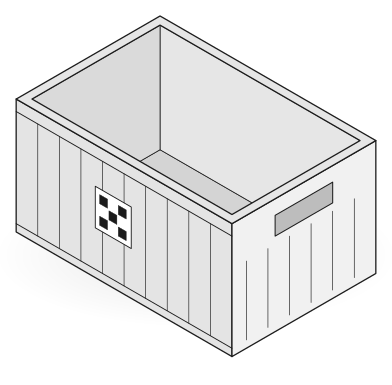
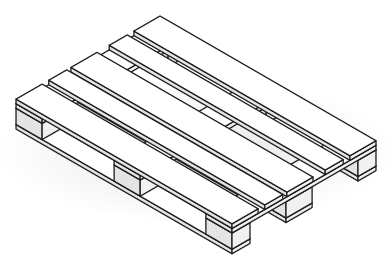
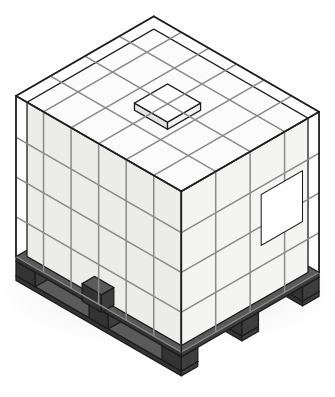
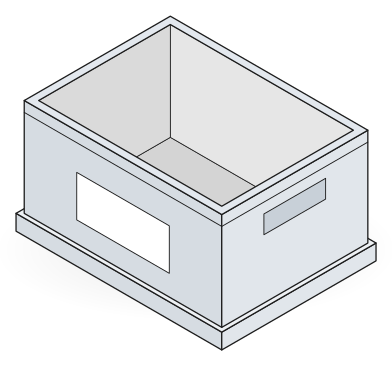
Use one shared event ledger across returnable transport items, whether your team says RTIs, returnable containers, RPCs, totes, dunnage, or IBCs. Keep the structure simple and strict:
| Record field | Why it matters now | Owner at capture |
|---|---|---|
| Packaging category and format | Separates pallets, crates, totes, IBCs, drums and mixed fleets for later Article 29 calculations | Dispatch or receiving operator |
| Unit identifier or controlled batch ID | Preserves evidence when some lanes are serialized and others are still batch-based | Site operations lead |
| Event type (dispatch, receipt, return, condition, repair) | Builds the rotation chain instead of isolated counts | Scanner at handoff |
| Timestamp and site | Proves sequence and supports exception aging | System-generated at scan |
| From and to party | Makes custody explicit across partners and locations | Dispatch and receiving teams |
| Condition outcome | Distinguishes reusable circulation from damaged or quarantined units | Receiving and quality teams |
| Exception owner and due date | Turns reconciliation from monthly detective work into daily closure | Operations coordinator |
This is where most teams either gain control or lose it. In recent sales conversations, operations teams repeatedly described the same failure mode: deposits exist, but daily custody evidence does not. The result is repeated calls, delayed reconciliations, and frequent replacement buys with no trusted root cause.
If your fleet is not fully serialized yet, you can still run this model. Use unit-level IDs where available and controlled batch IDs where they are not. What matters is that every movement lands in one ledger with one owner and one timestamped event history.
How should you roll this out in the next 30 days?
Roll out one lane first, not your whole network. A narrow lane with strict event capture and exception ownership gives better evidence than a wide rollout with loose discipline. You are proving operating behavior, not collecting dashboard screenshots.
A practical 30-day sequence:
- Week 1: define scope and event contract. Pick one packaging category and one route cluster. Freeze the event schema and exception owner rules.
- Week 2: launch capture at both ends. Enforce dispatch and receipt scanning or equivalent event capture for every movement in that lane.
- Week 3: run daily exception closure. Every mismatch gets one owner and one due date. No shared inbox, no monthly backlog.
- Week 4: review readiness. Measure unknown custody count, open exception age, and return confirmation lag. If these stabilize, replicate lane by lane.

This phased rollout also protects your investment decisions. You can validate where full serialization adds clear value, and where process discipline alone closes most gaps. That avoids overbuying hardware on lanes that are failing for governance reasons, not sensor reasons.
How does this connect to 2030 targets and day-to-day operations?
The same records that support PPWR targets also reduce operational waste today. When each handoff has clear custody and condition evidence, you close disputes faster, recover more assets, and make replacement decisions from facts instead of assumptions.
For 2030, Article 29 sets the percentages. For this quarter, your team needs fewer unknowns in circulation and fewer unresolved returns. One evidence model serves both horizons.
If you want to assess your own setup, map your current process against this post and the reuse reporting module overview. Then decide whether your next improvement is lane discipline, ID coverage, or exception workflow design.
When you want a working baseline with your own data, book a practical walkthrough.
Frequently asked questions
Is there already a legal minimum number of rotations we must hit?
Not yet. The PPWR library in this repo tracks the minimum-rotations delegated act as pending. Build your records now, but do not claim a final legal number until the act is published.
Do we need full serialization before we can start PPWR-ready records?
No. You can start with mixed granularity if custody, event types, and exception ownership are strict. Add full unit-level IDs first on lanes where losses, disputes, or audit risk are highest.
Does PPWR require a Digital Product Passport for packaging?
No. PPWR asks for a QR code or another data carrier on reusable packaging under Article 12. A Digital Product Passport is an ESPR concept, not a direct PPWR requirement.
Should EU and US teams track different operational records?
Usually no. One event ledger can support EU PPWR evidence and US reporting contexts. Keep one operational model, then generate jurisdiction-specific reporting views from the same underlying records.


